Wine Tasting Terms Explained: What "Legs" and "Finish" Actually Mean


March 31, 2026

Hey, let's be honest for a second: wine tasting can feel like walking into a room where everyone's speaking a secret language. Someone swirls, sniffs, makes a thoughtful face, and says something like, "Hmm, pronounced legs, medium-plus body, with a long finish and integrated tannins."
And you're standing there thinking: Legs? Like, does the wine have legs? Is that good? Am I supposed to see those? Also, what the heck is a finish—is this a movie?
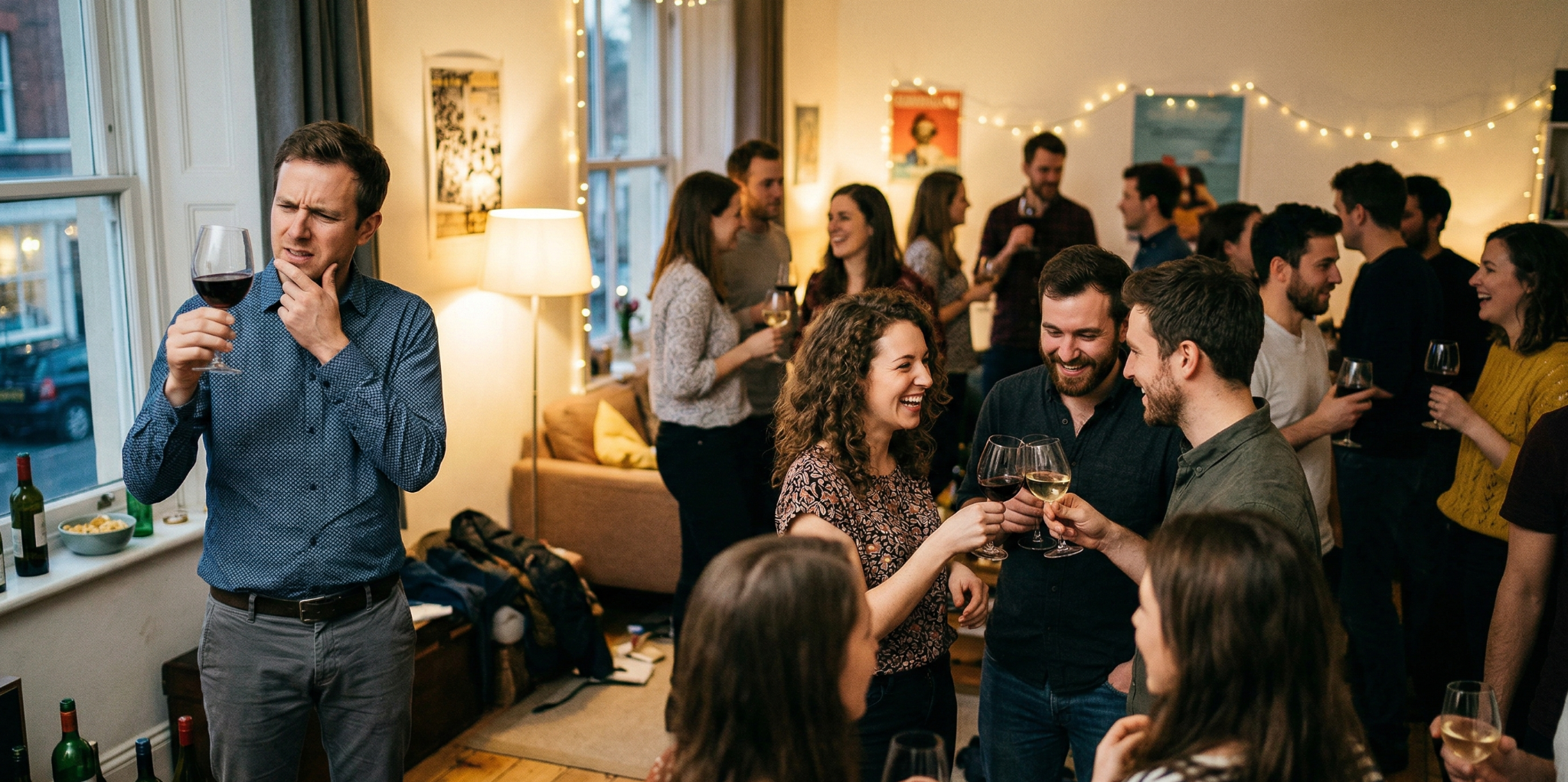
Here's the truth: those words aren't code to keep you out. They're just shortcuts—quick ways to describe what's happening in your glass. And once you know what they actually mean, you'll realize you've probably noticed all of these things already. You just didn't have the words for them yet.
So let's fix that. No jargon walls, no pretentious nonsense, no "you're holding the glass wrong" energy. Just clear, friendly explanations of the 12 most common tasting terms, what they really tell you (and what they don't), and how to start using them yourself tonight. Oh, and if you want to track your progress bottle by bottle, pop your notes into thewineoh.app it's the easiest way to build your own flavor dictionary over time.
Ready? Grab a glass (any wine will do) and let's decode this together.
Let's start with the big one. You've seen it: someone swirls the wine, holds the glass up to the light, and points at the drips running down the inside. "Look at those legs," they say, like they've just discovered gold.
What it actually is:
Legs (also called "tears") are the streaks of liquid that form and drip down the side of the glass after you swirl. They're caused by the Marangoni effect; a fancy way of saying that alcohol and water evaporate at different rates, creating surface tension that pulls the wine up the glass, then gravity pulls it back down.
What it tells you:
What it DOESN'T tell you:
Quality. Zero. Nada. A $10 jammy Zin can have thicker legs than a $200 Burgundy. Legs are about physics, not excellence.
How to spot it:
Try it now: Swirl that glass you're holding. See the drips? That's it. You're already tasting like a pro.
Track it: Log the wine in thewineoh.app and note "thick legs" or "thin legs." Over time, you'll see patterns, big reds usually have thicker legs, light whites thinner ones.
If legs are the most misunderstood term, "finish" is the most important. This is where you separate "meh" from "wow."
What it actually is:
The finish is how long the flavors linger in your mouth after you swallow (or spit, if you're fancy). It's not the taste while the wine's in your mouth: that's just flavor. The finish is the echo.
How to measure it:
The scale:
What it tells you:
Length = concentration. Wines with long finishes usually have better balance, more complexity, and higher quality grapes.
Try it now: Sip your wine. Swallow. Count. Are you still tasting cherry, oak, or spice? Or did it vanish instantly? That's your finish.
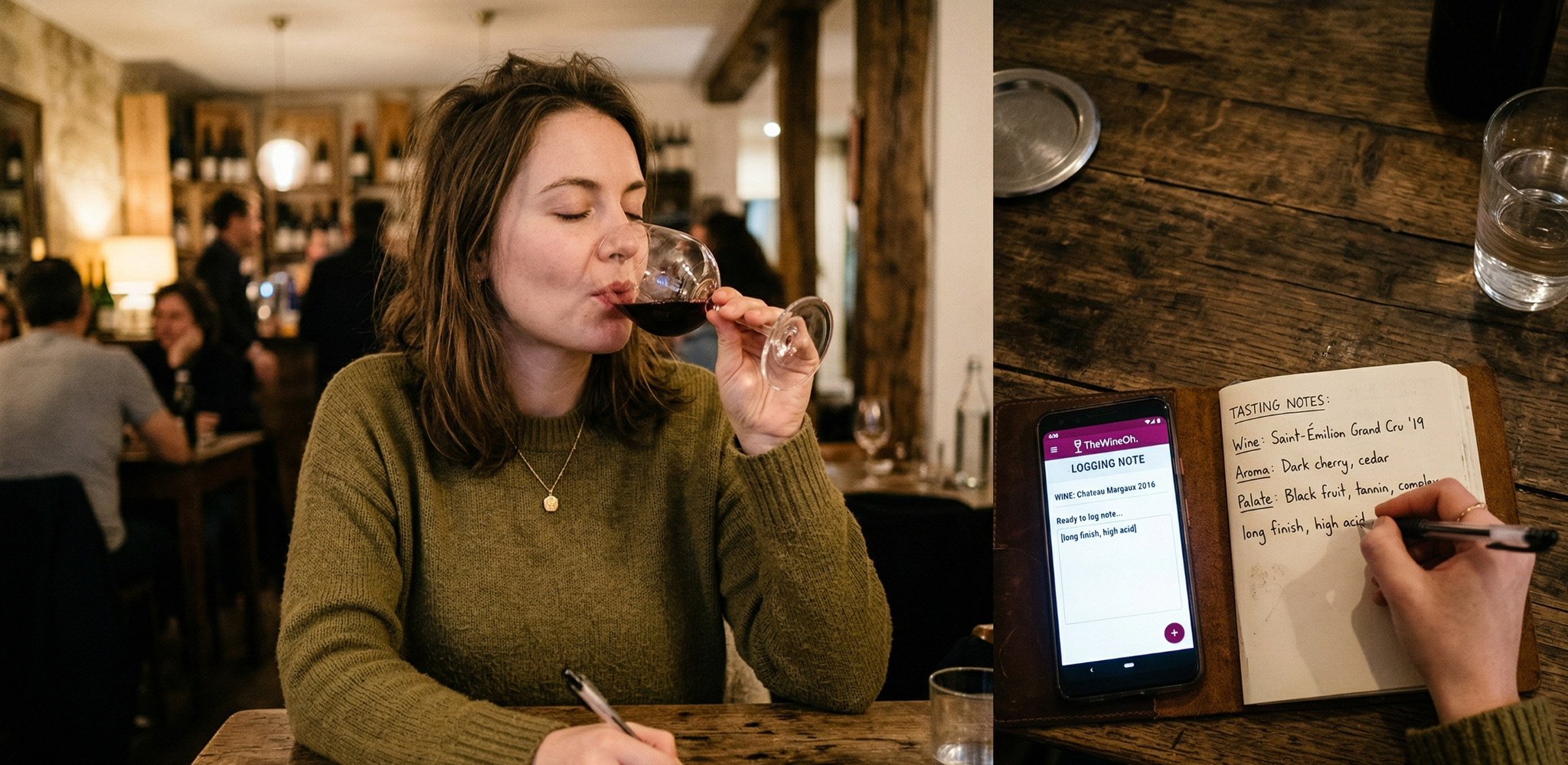
Track it: In thewineoh.app, add a note like "long finish, 20 seconds, dark cherry lingers." Compare bottles side-by-side—you'll quickly see which ones punch above their price.
You've heard wines described as "light-bodied" or "full-bodied." This isn't about the bottle size. It's about how the wine feels in your mouth.
What it actually is:
Body is the weight and texture of the wine on your tongue. Think of it like milk:
What drives it:
Examples:
Try it now: Sip your wine. Does it feel like water (light), milk (medium), or cream (full)? That's your body.
Track it: Log "full-bodied" or "light-bodied" in thewineoh.app. Over time, you'll notice your preferences "I keep reaching for medium-bodied reds" and that's gold for buying smarter.
Tannin is the word that scares people. Don't let it. You've felt tannin before, you just didn't know what to call it.
What it actually is:
Tannins are natural compounds from grape skins, seeds, and oak barrels. They create that dry, grippy, slightly bitter feeling on your gums and tongue.
What it feels like:
Think of over-steeped black tea. That puckery, drying sensation? That's tannin.
The scale:
What it tells you:
Tannin = aging potential. High-tannin wines can evolve for decades. Low-tannin wines are meant to drink young.
Try it now: Sip your wine. Focus on your gums. Do they feel dry or coated? That's tannin (or lack of it).
Track it: In thewineoh.app, note "high tannin, needs steak" or "soft tannin, drink now." You'll start predicting which bottles will age beautifully.
If tannin is the grip, acidity is the zing. It's what makes your mouth water and keeps you coming back for another sip.
What it actually is:
Acidity is the tartness in wine, from natural acids in grapes (mainly tartaric, malic, and citric acid). It's not the same as sour, it's brightness, freshness, lift.
What it feels like:
Think of biting into a green apple vs. a ripe banana. The apple makes your cheeks tingle? That's high acid.
The scale:
What it tells you:
High acid = ageability + food pairing power. Acid preserves wine and cuts through rich dishes.
Try it now: Sip your wine. Does your mouth water? Do your cheeks tingle? That's acidity.
Track it: Log "high acid, perfect with salad" in thewineoh.app. You'll quickly learn which wines wake up your palate.
When tasting pros say "sweetness," they don't just mean "tastes like candy." They're talking about residual sugar (RS), the grape sugar left after fermentation.
The scale:
Pro tip: You can have a wine that tastes fruity but is technically dry. Fruit ≠ sugar.
Try it now: Sip your wine. Does your tongue feel coated? Is there a hint of sweetness on the tip? That's residual sugar.
Track it: In thewineoh.app, tag wines "dry," "off-dry," or "sweet." You'll spot your sweet spot (pun intended).
Yes, there are two words for smell. No, it's not to confuse you (well, maybe a little).
Aroma: Smells from the grape itself; fruit, flowers, herbs. Think: cherry, citrus, lavender.
Bouquet: Smells from fermentation and aging; yeast, oak, leather, tobacco. Think: vanilla, smoke, earth.
Why it matters:
Young wines = more aroma. Aged wines = more bouquet.
Try it now: Sniff your wine. First pass: fruit? Flowers? That's aroma. Second pass (after swirling): oak? Spice? Earth? That's a bouquet.
Track it: Log both in thewineoh.app: "Aroma: black cherry, violet. Bouquet: cedar, tobacco." Your future self will love having this detail.
If you've ever tasted a wine and thought, "Hmm, vanilla?" or "Is that toast?" that's oak.
What it actually is:
Wine aged in oak barrels picks up flavors from the wood: vanilla, coconut, toast, smoke, spice, cedar.
The scale:
Try it now: Sip your wine. Do you taste vanilla, baking spice, or toast? That's oak.
Track it: Note "heavily oaked" or "unoaked" in thewineoh.app. You'll quickly learn if you're team oak or team fresh fruit.
Balance is the ultimate compliment. A balanced wine means no single element (acid, tannin, alcohol, sugar) sticks out awkwardly.
What it feels like:
Everything works together. The acid doesn't scream, the tannin doesn't dry you out, the alcohol doesn't burn, the fruit isn't cloying. It just… flows.
Try it now: Sip your wine. Does anything feel out of place? Or does it all harmonize? That's balance (or lack of it).
Track it: Log "perfectly balanced" or "acid dominates" in thewineoh.app. Over time, you'll gravitate toward balanced bottles automatically.
A complex wine doesn't just taste like one thing. It unfolds, layer by layer, the longer you sip.
What it feels like:
First sip: cherry. Second: cherry + earth. Third: cherry + earth + tobacco + hint of chocolate. You keep finding new things.
Try it now: Sip your wine three times in a row. Do you notice new flavors each time? That's complexity.
Track it: In thewineoh.app, note "complex, evolved over 3 sips" or "one-dimensional." You'll start valuing depth over power.
Terroir (teh-wahr) is the French word for "the taste of the place." It's the idea that soil, climate, and landscape imprint themselves on the wine.
What it feels like:
A Chablis (France) tastes different from a Chardonnay (California) not because of the grape, but because of the chalky soil vs. sunny climate.
Try it now: Compare two wines from the same grape but different regions. Notice the difference? That's terroir.
Track it: Log region + grape in thewineoh.app and compare. You'll start tasting places, not just fruit.
"Integrated" means the wine's elements (oak, tannin, acid, fruit) have melded together seamlessly. It's the opposite of "everything's fighting."
What it feels like:
Young wines can feel disjointed: oak here, tannin there, fruit hiding. Integrated wines feel like a chorus, not soloists.
Try it now: Sip your wine. Does anything stick out awkwardly? Or does it all feel seamless? That's integration.
Track it: Note "well-integrated" or "oak dominates" in thewineoh.app. You'll learn which wines need time to integrate and which are ready now.
You don't need a spittoon or a white tablecloth. Just do this:
That's it. Five steps, 12 terms, and you're tasting like a pro.
Now log it: Open thewineoh.app, scan the bottle, and drop your notes. Tag it with the terms you noticed. Over time, you'll build a personal flavor dictionary that's way more useful than any sommelier's script.
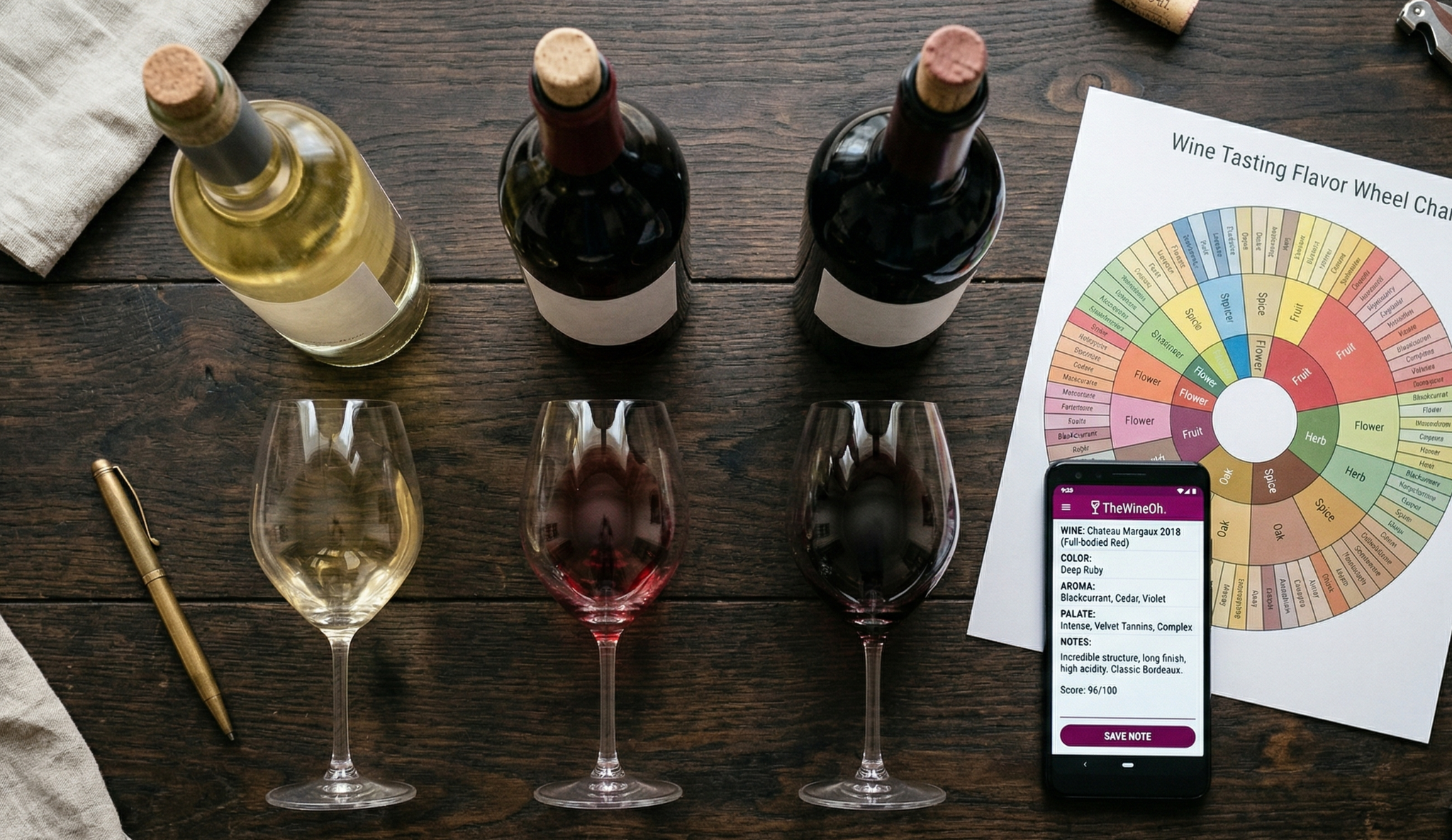
Here's the thing: these terms aren't about sounding fancy. They're about giving you the words to describe what you love or hate. Once you can say, "I like medium-bodied reds with soft tannin and long finish," you'll buy better wine, drink better wine, and enjoy it more.
So next time someone mentions legs or finish, you won't nod awkwardly. You'll swirl, sip, and say, "Yeah, thick legs, but that finish is short, let's try something else."
And that's power.
.svg)
Influencer
November 19, 2025
Consumers are shifting toward cleaner, additive-free wine experiences. Organic vineyards are proving that sustainable farming can elevate taste and quality. Here’s why clean wines are becoming the new favorite for mindful drinkers worldwide.
Discover More
.webp)
Influencer
November 21, 2025
Beyond cheese and charcuterie, the world of unexpected wine pairings is exploding. From sushi to spicy street food, new combinations are surprising wine lovers everywhere. Discover bold pairings that elevate both the dish and the glass.
Discover More
Influencer
November 19, 2025
Winemakers are blending centuries-old craftsmanship with cutting-edge tech innovations. Smart fermentation, AI-based grape analysis, and climate-controlled aging are reshaping the industry. A behind-the-scenes look at how technology is redefining experience.
Discover More.webp)
Influencer
November 19, 2025
Across the globe, female winemakers and sommeliers are redefining leadership in the wine world. Their creativity, precision, and bold ideas are inspiring a new era of wine culture. Meet the women changing how the world thinks, tastes, and talks about wine.
Discover More


