Is Wine Good or Bad for Your Gut Health? (The Science, No Scare Tactics)




April 8, 2026

Hey, let's talk about your gut.
Not in a "how's your digestion?" small-talk way. But in a "this trillions-of-bacteria ecosystem inside you controls your mood, your immune system, your skin, and maybe even your wine preferences" kind of way.
You've probably heard that wine is "good for your heart." That headline's been around since the '90s. But lately, there's a new buzzword in town: gut health. And everyone's wondering: does wine help your microbiome thrive, or is it secretly wrecking it from the inside?
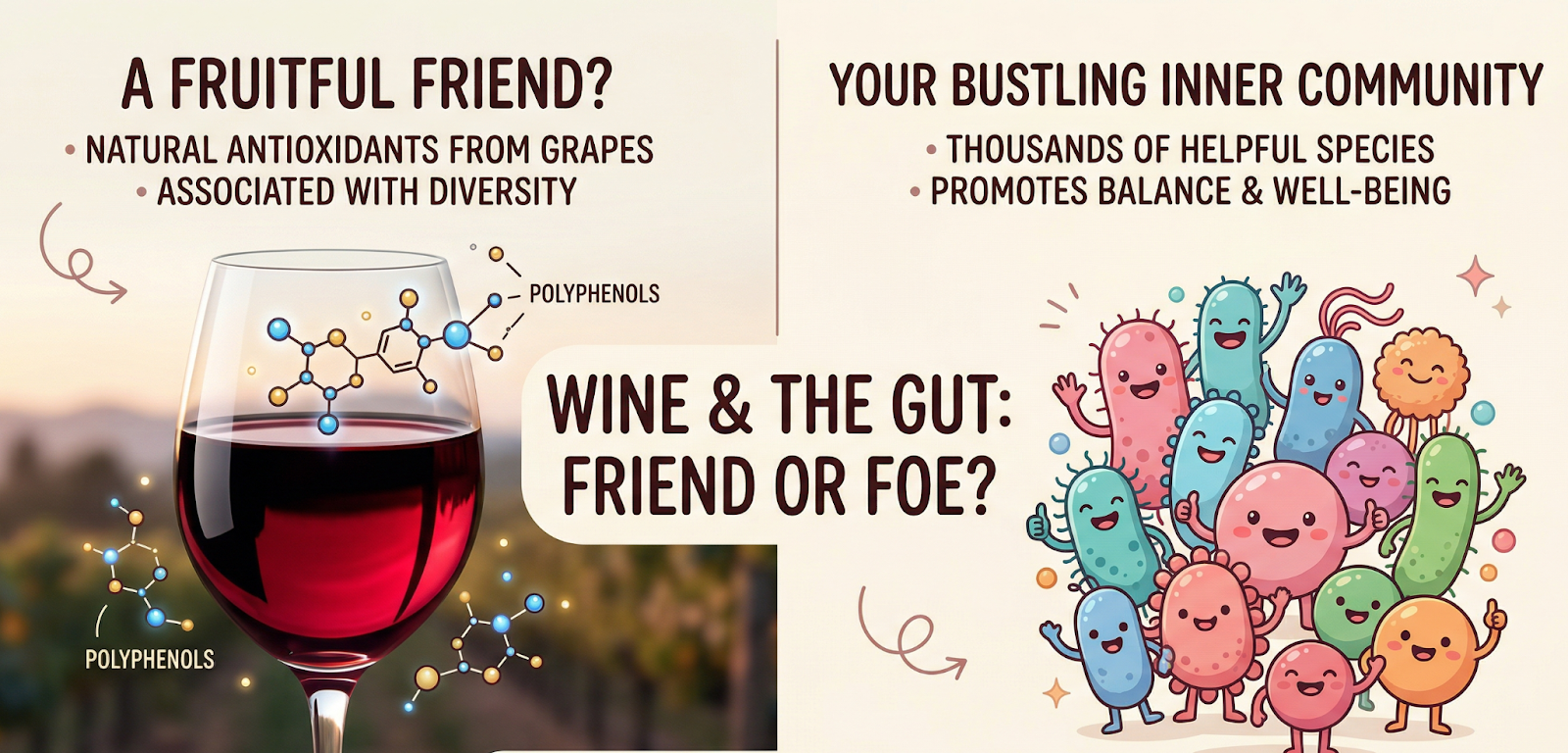
Here's the short answer: It depends. On how much you drink, what you drink, and how often.
The long answer? Way more interesting. And way less scary than the clickbait suggests.
So grab a glass (maybe just one for now), and let's dive into the science of wine and your gut, no jargon, no fear-mongering, just the actual research explained like we're chatting over coffee (or, you know, a nice Barolo).
Your gut microbiome is the community of trillions of bacteria, viruses, and fungi living in your digestive tract. Think of it like a bustling city inside you. Some residents are helpful (the "good guys" that fight inflammation, make vitamins, and keep your immune system chill). Some are troublemakers (the "bad guys" that cause bloating, inflammation, and general chaos).
A healthy gut = diverse city. Lots of different species, all coexisting peacefully.
An unhealthy gut = monochrome suburb. Few species, the bad guys taking over, inflammation everywhere.
What you eat and drink directly shapes this city. Fiber feeds the good guys. Sugar feeds the bad guys. And alcohol? Well, alcohol is… complicated.
Here's where wine gets its glow-up. Red wine is packed with polyphenols—plant compounds that act as antioxidants. The most famous one is resveratrol, but there are dozens more: quercetin, catechins, anthocyanins.
Why does your gut care?
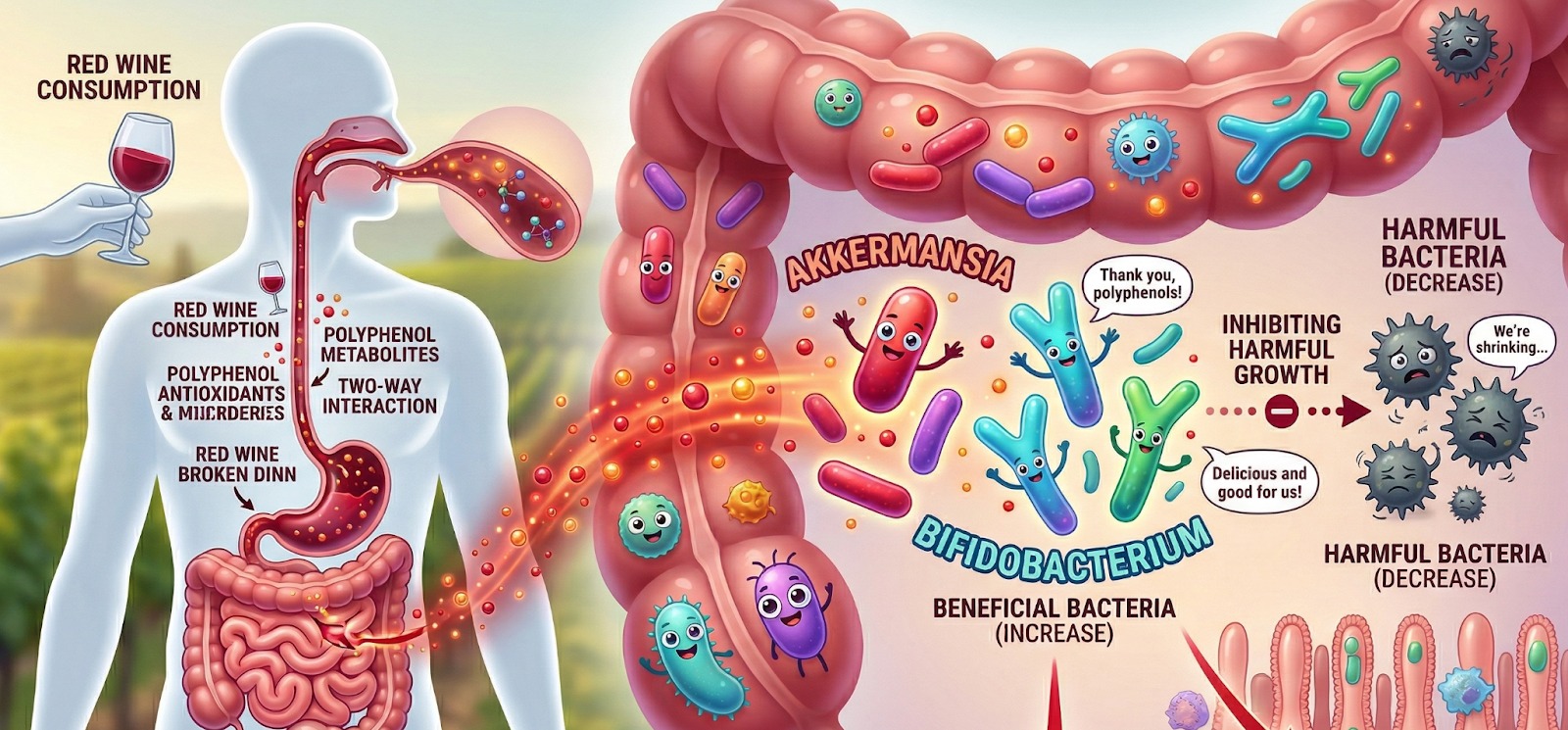
Because you don't actually absorb most of these polyphenols. They travel down to your large intestine, where your gut bacteria feast on them. And when the good bacteria eat polyphenols, they throw a party:
The research:
Multiple studies have found that moderate red wine drinkers have higher levels of beneficial bacteria like Akkermansia muciniphila (linked to healthy weight and metabolism) and Bifidobacterium (linked to better digestion and immunity) compared to non-drinkers or heavy drinkers.
Translation: A glass of red isn't just relaxing. It's literally feeding your gut's best residents.
Okay, pause. Before you pop a second glass thinking you're "health-optimizing," let's talk about the elephant in the room: alcohol is ethanol, and ethanol is a toxin your liver has to process.
In small doses, your body handles it fine. In large doses, it wreaks havoc, including on your gut.
What heavy drinking does to your microbiome:
The tipping point:
Most studies show benefits peak at 1 glass per day for women, 1–2 for men. After that, the negative effects of alcohol start outweighing the polyphenol benefits. By 3+ glasses a day, you're firmly in "gut-wrecking" territory.
So yes, dose matters. A lot.
Short answer: Yes. Red wine is the gut health champion. White wine? Not so much.
Why?
Polyphenols live in grape skins. Red wine is fermented with skins (that's where the color comes from). White wine is fermented without them. So red wine has up to 10x more polyphenols than white.
That doesn't mean white wine is "bad." It still has some polyphenols (just fewer), and the alcohol effect is the same. But if you're drinking specifically for gut benefits, red is the clear winner.
Fun fact: Rosé is somewhere in the middle; more polyphenols than white, less than red. So if you're a rosé person, you're getting a little bit of the benefit.
Here's a question I get all the time: "Is natural wine easier on my gut?"
The short answer: Maybe, if you're sensitive.
Sulfites (preservatives added to most wines) don't directly harm your microbiome. But some people are sensitive to them, experiencing bloating, headaches, or IBS-like symptoms. If you're one of those people, switching to a low-sulfite or natural wine might reduce those issues, not because it's "healthier," but because you're removing a trigger.
Another factor: Natural wines often have higher polyphenol counts (because they're less processed), which could theoretically boost the gut benefit. But there's no direct study on this yet.
Bottom line: If regular wine makes you bloated, try natural or low-sulfite. If you feel fine, don't stress about it.
Here's something most people don't think about: when you drink matters almost as much as how much.
Your gut bacteria operate on a circadian rhythm, just like you. They expect rest periods. If you drink seven glasses in one night (binge drinking), you're overwhelming your system, spiking inflammation, and wrecking diversity.
But if you drink one glass with dinner, most nights of the week, your body has time to recover, and the polyphenols can do their slow, steady work.
The research:
Studies show that regular, moderate drinkers have healthier microbiomes than weekend warriors who binge. Consistency > intensity, even with wine.
Pro tip: Always drink with food. Food slows alcohol absorption, reduces gut irritation, and gives the polyphenols more time to interact with your bacteria. Wine on an empty stomach is a one-way ticket to Bloat City.
If you have IBS, SIBO, or a generally sensitive gut, wine is… tricky.
The good: Polyphenols can reduce inflammation, which might help some IBS symptoms.
The bad: Alcohol can irritate the gut lining, trigger motility issues (diarrhea or constipation), and feed certain bacteria that cause bloating.
FODMAP factor:
Dry wines (red, white, sparkling) are generally low-FODMAP and safe for most IBS sufferers in small amounts (1 glass). But sweet wines, dessert wines, and some high-sugar cocktails can be high-FODMAP and trigger symptoms.
My advice:
Your gut is unique. What works for your friend might not work for you. Tracking is the only way to know.
So, is wine good or bad for your gut?
It's good if:
It's bad if:
The bottom line: Wine isn't a probiotic. It's not a "health food." But enjoyed mindfully, it can be part of a gut-healthy lifestyle, thanks to those polyphenols and the stress-relieving, social-connection benefits that also support gut health.
Because let's not forget: stress wrecks your microbiome. And if a glass of wine helps you unwind, laugh with friends, and slow down after a long day? That's a gut benefit too.
Want the best of both worlds? Here's the game plan:
Over time, you'll see patterns. Maybe you tolerate Pinot Noir better than Cabernet.
Here's the thing: your gut doesn't need perfection. It needs balance.
You don't have to drink organic, biodynamic, low-sulfite, natural wine from a specific vineyard in the Andes to be "healthy." You just need to pay attention. To notice what makes you feel good and what doesn't. To enjoy the glass without guilt, but also without overdoing it.
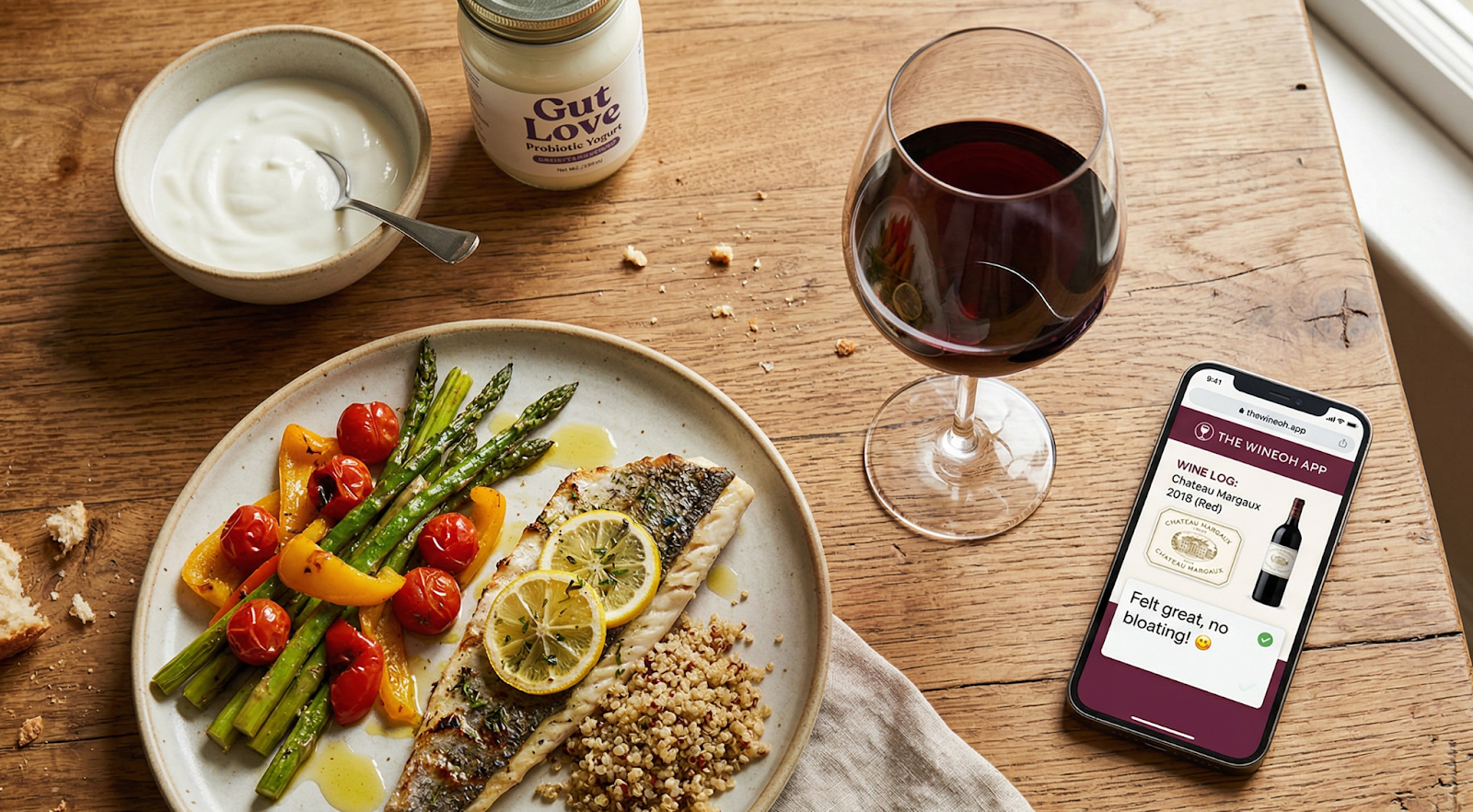
And that's where a tool like thewineoh.app comes in. It's not about restriction. It's about awareness. Log your bottles. Note how you feel. Build a history that tells you exactly what works for your body.
Because at the end of the day, the best diet (and the best wine habit) is the one that makes you feel good, sustainably.
So, is wine good or bad for your gut?
It's both. And neither. It's a tool. And like any tool, it depends on how you use it.
Used wisely, it feeds your good bacteria, reduces inflammation, and helps you unwind. Used recklessly, it wrecks your diversity and triggers chaos.
The choice is yours. And now, you've got the science to make it wisely.
Pour your glass. Savor it. Pair it with a good meal. And maybe, just maybe, thank your microbiome for the party you're throwing it.
.svg)



Influencer
November 19, 2025
Consumers are shifting toward cleaner, additive-free wine experiences. Organic vineyards are proving that sustainable farming can elevate taste and quality. Here’s why clean wines are becoming the new favorite for mindful drinkers worldwide.
Discover More
.webp)
Influencer
November 21, 2025
Beyond cheese and charcuterie, the world of unexpected wine pairings is exploding. From sushi to spicy street food, new combinations are surprising wine lovers everywhere. Discover bold pairings that elevate both the dish and the glass.
Discover More
Influencer
November 19, 2025
Winemakers are blending centuries-old craftsmanship with cutting-edge tech innovations. Smart fermentation, AI-based grape analysis, and climate-controlled aging are reshaping the industry. A behind-the-scenes look at how technology is redefining experience.
Discover More.webp)
Influencer
November 19, 2025
Across the globe, female winemakers and sommeliers are redefining leadership in the wine world. Their creativity, precision, and bold ideas are inspiring a new era of wine culture. Meet the women changing how the world thinks, tastes, and talks about wine.
Discover More


