Wine and Migraines: Triggers, Safe Styles, Prevention




April 16, 2026

Let’s be real for a second: nothing kills the vibe quite like a wine-induced migraine.
You’re having a great time: good friends, delicious food, a beautiful bottle of red and then it hits. That familiar throb behind your eye. The sudden sensitivity to light. The creeping nausea that tells you tomorrow is going to be a write-off. It’s enough to make you swear off wine forever (until next weekend, when you forget how bad it was and do it all again).
Here’s the thing: you don’t actually have to choose between enjoying wine and feeling human tomorrow. There’s real science behind why wine triggers migraines, which styles are safer, and how to drink without paying the price.
Let’s break it down, no fear-mongering, no “just quit alcohol” nonsense, just actionable info so you can actually enjoy your glass. And if you want personalized recs for low-risk wines that won’t wreck your head, we’ve built exactly that on TheWineOh.
First, some context: not everyone gets migraines from wine. Your friend can down three glasses of red and wake up fine. You have one sip and spend tomorrow horizontal. Why?
Because migraine brains are hypersensitive. They’re like overprotective bouncers at a club, scanning for any potential threat and shutting the whole place down at the first sign of trouble. Wine contains several compounds that can trip that alarm.
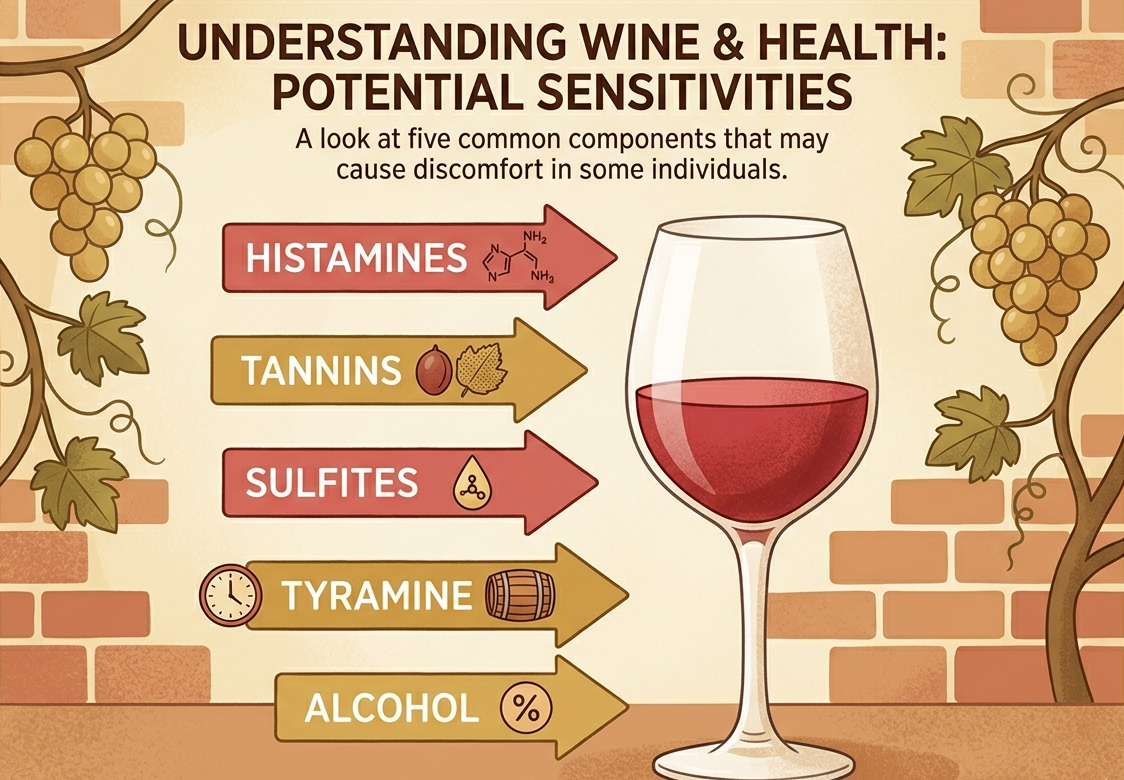
Here are the usual suspects:
Found mostly in red wine, histamines are natural compounds that come from grape skins. During fermentation, especially with extended skin contact (which red wine has), histamine levels rise.
If your body doesn’t produce enough of the enzyme (DAO) that breaks down histamines, they build up. Result? Blood vessels dilate, inflammation spikes, and boom: migraine.
Red flag wines: Red wines, especially aged ones, Syrah, Cabernet Sauvignon, Merlot.
Tannins are those drying, grippy compounds you feel on your tongue and gums. They come from grape skins, seeds, and oak barrels. Tannins trigger serotonin release in some people, and for migraine-prone brains, that serotonin spike can set off an attack.
Red flag wines: Bold reds with heavy tannin structure (Cabernet, Nebbiolo, Malbec).
Here’s the plot twist: sulfites are probably not your main enemy. Yes, they’re preservatives added to wine (and found naturally in fermentation). But studies show sulfites rarely trigger migraines unless you have a specific asthma-related sensitivity.
The real issue? Sulfites get blamed for everything, while histamines and tannins slip under the radar.
Red flag wines: Cheap white wines and sweet wines often have more added sulfites, but they’re still usually safer than reds for migraine sufferers.
An amino acid that forms as wine ages, tyramine affects blood pressure and can trigger migraines in sensitive people. Older wines = more tyramine.
Red flag wines: Aged reds, oxidized wines, anything that’s been bottled for years.
Alcohol is a vasodilator (widens blood vessels) and a diuretic (dehydrates you). Both are classic migraine triggers. Plus, your body produces acetaldehyde as it metabolizes alcohol, and that compound is straight-up inflammatory.
Red flag wines: High-ABV wines (14%+), anything you drink too fast.
If you’re a migraine sufferer, here’s the hard truth: red wine is your biggest risk.
Studies consistently show red wine triggers migraines more than any other type up to 9 times more likely than white wine for some people. That’s because red wine has the perfect storm: high histamines, high tannins, and often higher alcohol content.
But here’s the good news: not all wine is created equal. Some styles are significantly lower-risk, and with the right choices, you can still enjoy a glass without the fallout.
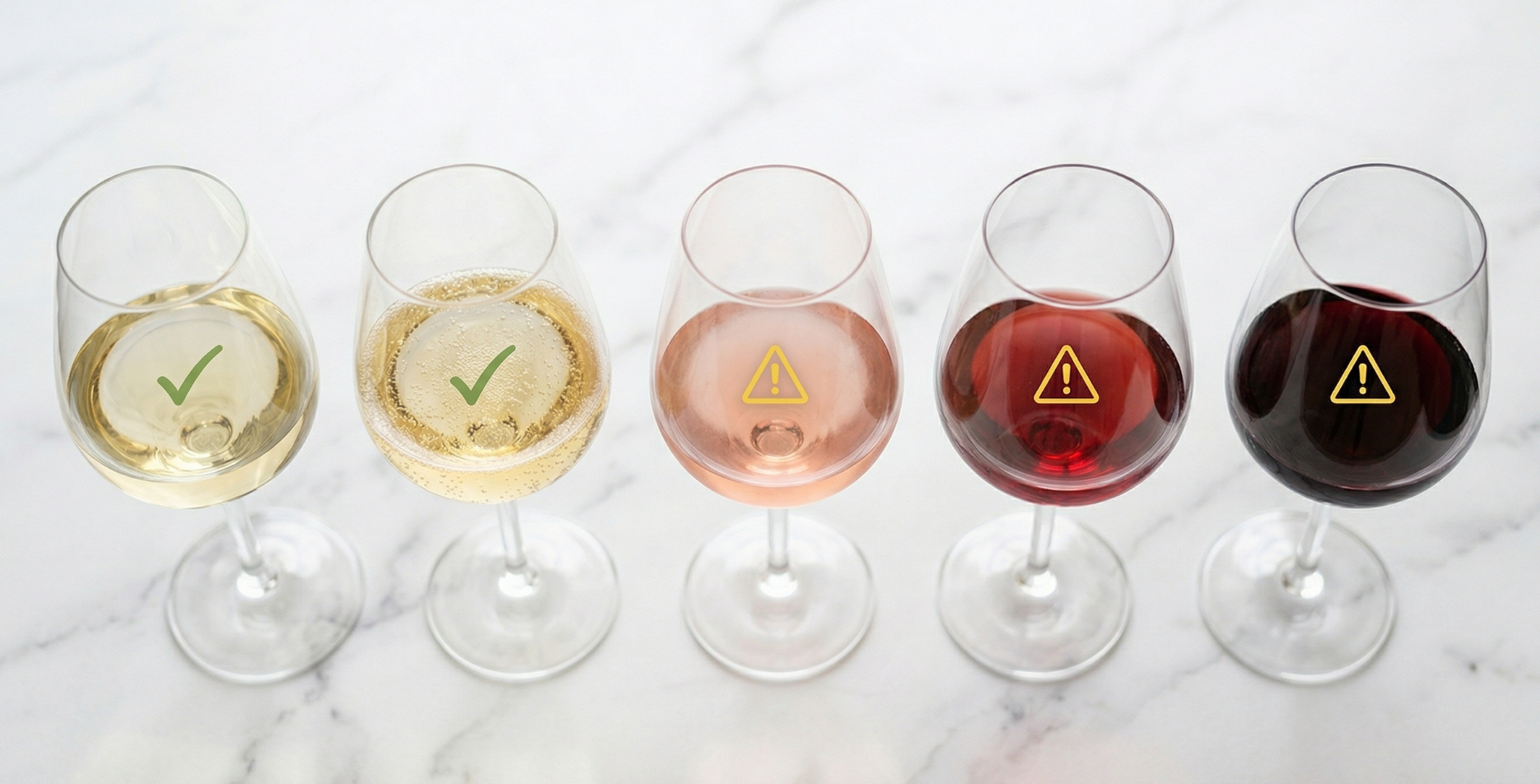
Okay, so red wine is risky. But that doesn’t mean you’re banned from wine forever. Here are the safer bets, ranked from lowest to moderate risk:
White wine has minimal skin contact, so histamine and tannin levels are much lower. Sauvignon Blanc, Pinot Grigio, and Albariño are usually the safest bets.
Why: Less skin contact = fewer triggers. Crisp, young whites are your friend.
Champagne, Prosecco, and Cava are often well-tolerated. They’re usually lower in histamines, and the carbonation might actually help your body process alcohol faster (though the science on this is mixed).
Why: Made from white grapes, minimal skin contact, often lower ABV.
Dry rosé has brief skin contact (just enough for that pink color), so it has some histamines and tannins, but way less than red wine. Stick with Provence-style dry rosés, not the sweet White Zinfandel stuff.
Why: Middle ground between white and red. Enjoyable, but proceed with caution if you’re highly sensitive.
Some winemakers are now producing low-histamine reds using specific yeasts and shorter maceration times. Pinot Noir and Gamay tend to be lower in histamines than Syrah or Cabernet.
Why: If you must have red, choose lighter-bodied, young reds with less tannin structure.
Remember that orange wine is white wine made with extended skin contact. That means higher histamines and tannins, basically red wine risks in white wine clothing. Only try this if you know you tolerate histamines well.
Why: Beautiful and complex, but risky for migraine brains.
Want specific bottle recommendations that are low-risk and actually available? We’ve got a curated list of migraine-friendly wines on TheWineOh that updates regularly based on new releases and user feedback.
Alright, you’ve picked a safer wine. Now what? Here’s how to minimize your risk even further:
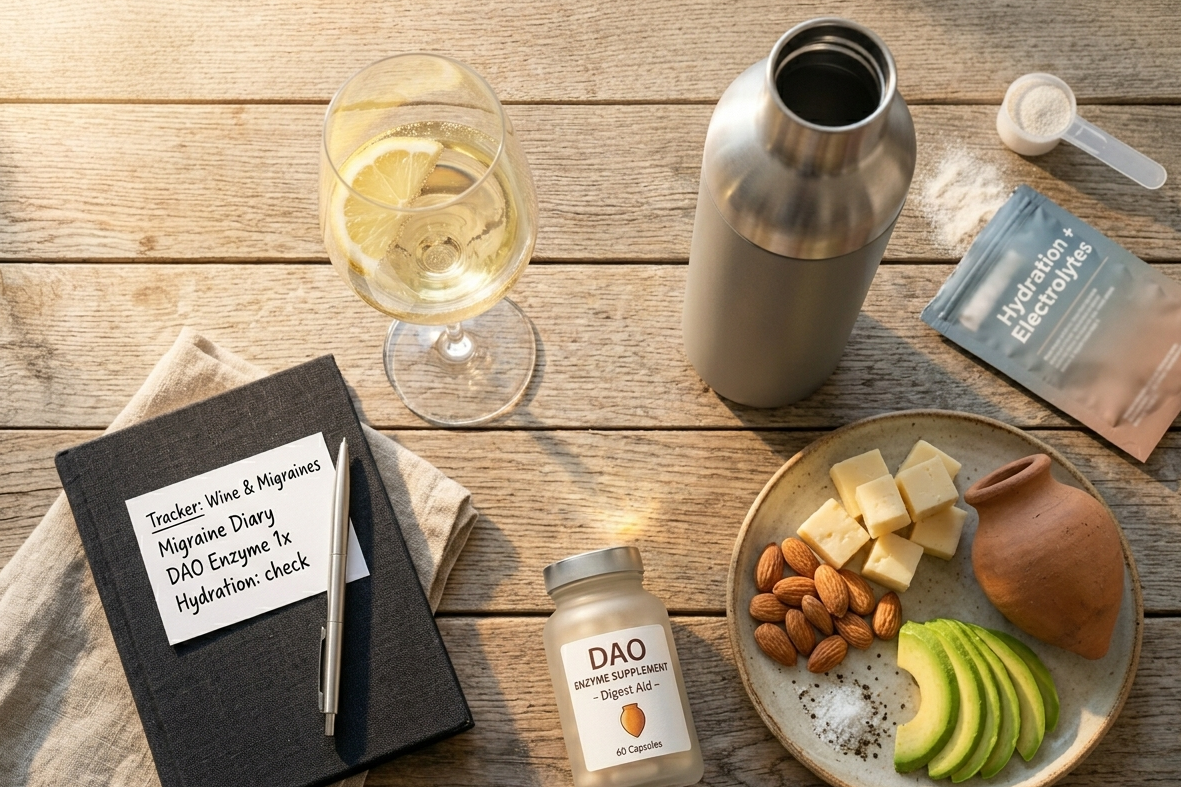
For every glass of wine, drink one full glass of water. Alcohol dehydrates you, and dehydration is a top migraine trigger. Start hydrating before you drink, not after.
Pro move: Drink 16 oz of water with electrolytes before your first sip.
Never drink on an empty stomach. Food slows alcohol absorption and gives your body something to work with while it processes the wine.
Best pre-game snacks: Protein + healthy fat (cheese and nuts, avocado toast, grilled chicken). Avoid aged cheeses and cured meats (high in histamines themselves).
One glass over two hours is very different from two glasses in 30 minutes. Slow down. Your body needs time to metabolize alcohol and clear out histamines.
Rule of thumb: Max one drink per hour. Set a timer if you have to.
Older wines = more tyramine and histamines. Stick with recent vintages (last 1-3 years) to minimize exposure.
How to tell: Check the vintage on the label. Avoid anything labeled “reserve” or “aged” if you’re highly sensitive.
Some people find relief with over-the-counter DAO enzyme supplements or antihistamines taken before drinking. This isn’t medical advice: check with your doctor, but it’s a strategy many migraine sufferers swear by.
Track what you drink, how much, what you ate, and whether you got a migraine. Patterns will emerge. Maybe you’re fine with Pinot Noir but wrecked by Syrah. Maybe it’s only a problem when you skip dinner.
Pro tip: We’ve got a free, simple tracking template on TheWineOh that helps you log your drinks and spot your personal triggers without the hassle.
Let’s bust a few quick myths before you go:
Myth 1: “Organic wine won’t give me a migraine.”
Not necessarily. Organic wine can still have histamines and tannins. The farming method doesn’t change the fermentation chemistry.
Myth 2: “Expensive wine is safer.”
Price doesn’t correlate with histamine levels. A $15 Pinot Grigio might be safer than a $100 aged Cabernet.
Myth 3: “Sulfite-free wine is the answer.”
All wine contains some sulfites (they’re a natural byproduct of fermentation). “No added sulfites” doesn’t mean sulfite-free, and sulfites probably aren’t your main trigger anyway.
Myth 4: “If I get a migraine from wine, I should quit alcohol forever.”
Not true. Many migraine sufferers tolerate certain styles just fine. It’s about finding your safe zone, not banning everything.
Here’s the honest truth: if you’re in the middle of a migraine cluster, if you’ve had three migraines this week already, or if your doctor has told you to avoid alcohol entirely, skip the wine. No glass is worth that level of pain.
But if you’re in a stable place, if you’ve identified your triggers, and if you’re strategic about what and how you drink? You can absolutely enjoy wine without the fallout.
Wine and migraines don’t have to be a forever breakup. Yes, red wine is risky. Yes, your brain is hypersensitive. But with the right knowledge; choosing safer styles, hydrating, eating, pacing yourself, you can tilt the odds in your favor.
Start with white wines and sparkling. Avoid aged, bold reds. Drink water. Eat food. Track your patterns. And if you want personalized recs for low-risk wines that match your taste (because “safe” doesn’t have to mean “boring”), we’ve got you covered on TheWineOh.
We’ve built a whole section dedicated to migraine-friendly wines, complete with user reviews from people who actually track their triggers. No guesswork. No wasted money on bottles that wreck your weekend. Just real recs from real people who love wine but hate migraines.
Your next glass doesn’t have to come with a price tag of pain. Drink smarter, not less.
.svg)



Influencer
November 19, 2025
Consumers are shifting toward cleaner, additive-free wine experiences. Organic vineyards are proving that sustainable farming can elevate taste and quality. Here’s why clean wines are becoming the new favorite for mindful drinkers worldwide.
Discover More
.webp)
Influencer
November 21, 2025
Beyond cheese and charcuterie, the world of unexpected wine pairings is exploding. From sushi to spicy street food, new combinations are surprising wine lovers everywhere. Discover bold pairings that elevate both the dish and the glass.
Discover More
Influencer
November 19, 2025
Winemakers are blending centuries-old craftsmanship with cutting-edge tech innovations. Smart fermentation, AI-based grape analysis, and climate-controlled aging are reshaping the industry. A behind-the-scenes look at how technology is redefining experience.
Discover More.webp)
Influencer
November 19, 2025
Across the globe, female winemakers and sommeliers are redefining leadership in the wine world. Their creativity, precision, and bold ideas are inspiring a new era of wine culture. Meet the women changing how the world thinks, tastes, and talks about wine.
Discover More


