What Is "Natural Wine" and Is It Actually Better for You?




March 12, 2026

Hey, have you noticed those cloudy orange bottles with hand-scrawled labels popping up everywhere? The ones that say “natural wine” and promise no headaches, better vibes, maybe even a glowier you? I’ve stared at them in the wine aisle, wondering: Is this actually healthier, or just hipster juice?

As a fellow curious beginner, let’s figure this out together. We’ll unpack what “natural” even means, why it tastes so… different, and whether the health hype holds water. No jargon, just honest questions and answers you can test yourself. Grab a regular wine and a “natural” one if you’re brave, log ’em both in thewineoh.app and see what your tastebuds say.
Here’s the simple version: natural wine = as little human messing around as possible. Think grapes grown without chemicals, fermented with whatever wild yeasts are hanging out on the skins, and bottled pretty much as-is. No factory additives, no fining (that stuff that makes wine clear), often no sulfites added.
But here’s the catch: there’s no official rulebook. Anyone can slap “natural” on a label. Some producers are hardcore purists; others are just jumping on the trend. Major wine groups have tried defining it (like “nothing added, nothing taken away”), but it’s still fuzzy.
The usual natural wine checklist:
Sounds pure, right? But that “wild yeast” part is why your first natural wine might taste like… barnyard? Cider? Wet wool? More on that soon.
Beginner move: Next time you see “natural,” flip to the back. If it says “contains sulfites” (most do), it’s not 100% pure but still more “hands-off” than grocery store bottles.
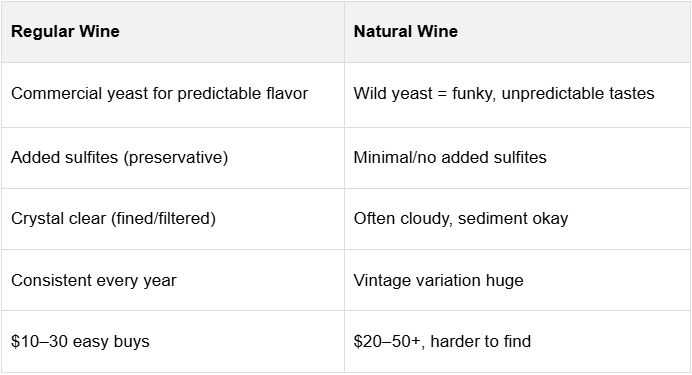
Regular wine is like your reliable Toyota; drives great every time. Natural wine is the quirky vintage VW; fun when it works, stranded when it doesn’t.
Curious test: Buy one conventional bottle (say, $15 Cabernet) and one natural (maybe $25 Gamay). Taste blind with a friend. Log notes in thewineoh.app: “funky vs clean,” “headache next day?” You’ll feel the difference.
Your first sip might go: “Whoa, is this spoiled?” Common natural wine flavors:
Why? No filtering means all the grape’s wild personality stays. Commercial wines get “cleaned up” to taste smooth and fruit-forward.
Beginner reaction spectrum:
Most newbies land #2 or #3. It grows on some people after 3–5 bottles. Log your first funky one in thewineoh.app “orange, petrichor, divisive.”
Here’s why “natural wine” went viral: “No sulfites = no headaches!” Let’s unpack if that’s real.
Truth: All wine has sulfites, grapes make them naturally (10–40 ppm). Commercial wines add more (up to 150 ppm) as preservative. Natural wines cap at 10–30 ppm total.
Does it matter? Only ~1% of people have true sulfite allergies (mostly asthmatics). For regular headache folks, sulfites aren’t the main culprit. Dehydration, histamines (higher in reds), and congeners (fermentation byproducts) cause most post-wine pain.
Natural wine twist: Less sulfite stability means more live yeast/bacteria. Some get worse headaches from natural wine. Studies show no clear “healthier” winner: both dehydrate equally.
“Cleaner” ingredients: True, fewer additives. But grapes still have pesticides unless certified organic.
“Better for the gut:” Probiotics from live yeast? Unproven.
“Lower alcohol:” Often true (11–13% vs 14%+), so less hangover fuel.
My beginner experiment: Drank natural vs conventional same night (one glass each). Natural gave mild stomach funk; conventional gave usual mild headache. Tracked in thewineoh.app. Your mileage varies.
Bottom line: Natural might cut sulfite headaches for sensitive folks. Alcohol/dehydration still king. Hydrate regardless.
Taste: Depends on you. Love predictable cherry cola? Stick conventional. Crave adventure (farmyard, cider, sour candy)? Natural wins.
Health: Marginal edge for sulfite-sensitive. Riskier for “funky fault” headaches.
Price: Natural $25–60. Conventional $10–25 same quality.
Availability: Natural at wine bars, specialty shops. Conventional everywhere.
Beginner verdict: Try 2–3 bottles. If 50%+ thrill you, dive in. Else, save cash for conventional winners.
Easy entry points:
Avoid first try: Heavy cloudy reds (too intense).
Scan labels at thewineoh.app “natural orange, $28, loved/hated.” Build your map.
What to look for:
Red flags:
Your first 3-bottle challenge:
Taste week apart. App-log: “fizz level, funk score, rebuy?” Science yourself.
“Natural = no sulfites” False; all have some.
“Always healthier” Nope; funky faults hurt more.
“Tastes better” Subjective. Clean vs wild.
“Organic grapes” Often, but check the label.
Natural wine = wild child of winemaking. Thrilling when it clicks, confusing when cloudy/funky. Health edge slim- hydration > sulfites.
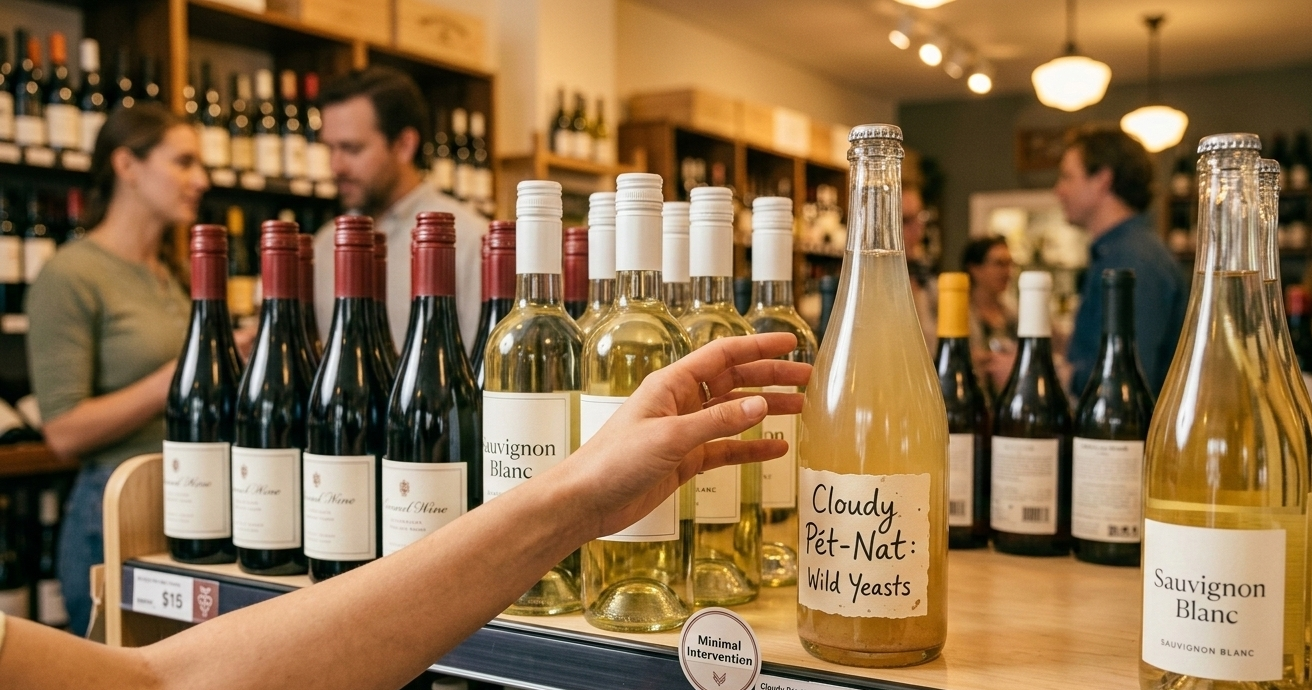
Your action plan:
I’m team “both”: conventional Tuesday, natural date night. What’s your first natural bottle?
.svg)



Influencer
November 19, 2025
Consumers are shifting toward cleaner, additive-free wine experiences. Organic vineyards are proving that sustainable farming can elevate taste and quality. Here’s why clean wines are becoming the new favorite for mindful drinkers worldwide.
Discover More
.webp)
Influencer
November 21, 2025
Beyond cheese and charcuterie, the world of unexpected wine pairings is exploding. From sushi to spicy street food, new combinations are surprising wine lovers everywhere. Discover bold pairings that elevate both the dish and the glass.
Discover More
Influencer
November 19, 2025
Winemakers are blending centuries-old craftsmanship with cutting-edge tech innovations. Smart fermentation, AI-based grape analysis, and climate-controlled aging are reshaping the industry. A behind-the-scenes look at how technology is redefining experience.
Discover More.webp)
Influencer
November 19, 2025
Across the globe, female winemakers and sommeliers are redefining leadership in the wine world. Their creativity, precision, and bold ideas are inspiring a new era of wine culture. Meet the women changing how the world thinks, tastes, and talks about wine.
Discover More


