Cooking with Wine: What Can I Use as a Substitute for Dry White Wine?




March 24, 2026

Let’s be honest: “½ cup dry white wine” has ruined many perfectly good evenings.
You’re halfway through cooking, onions are sizzling, recipe cheerfully says “add wine,” and your reality is:
Good news, you absolutely don’t need dry white wine to cook delicious food. You just need to understand what wine is doing in the pan, then swap those jobs out with other ingredients you probably already have.

I’ll walk you through it like we’re cooking together in your kitchen: what wine actually brings to a dish, the best substitutes by recipe type, exact ratios, and a few “learn from my disaster” warnings. You can even log your favorite swaps in thewineoh.app so you remember what worked (and what didn’t).
Before we swap anything, let’s break down the job description.
Dry white wine usually brings three things to food:
The alcohol mostly cooks off, so its main role is more about flavor delivery than “booziness.”
So when a recipe says “add ½ cup dry white wine,” what it’s really asking for is:
That’s what we’re going to mimic.
Think of it like this:
Once you know the job, you’ll know which substitute to grab.
Let’s go through the best options, with when and how to use each.
If you remember nothing else, remember this combo.
Formula:
Use when:
Pick your broth:
Pick your acid:
How to do it without wrecking the dish:
Quick example:
Recipe: Shrimp scampi calling for ½ cup dry white wine
Swap: ½ cup chicken broth + 1½ teaspoons lemon juice
Result: Bright, savory, no one misses the wine.
Log it in thewineoh.app: “Shrimp scampi - broth + lemon worked, no wine needed.”
Vinegar is more acidic than wine, so you can’t just dump it in 1:1 but diluted, it’s an excellent stand-in.
Best vinegars to use:
Skip: distilled white vinegar (too harsh), balsamic (too sweet and dark for “dry white”).
Formula:
Taste as you go; you might not need the full amount.
Great for:
Example:
Chicken piccata asks for ⅓ cup white wine.
Try: 3 tablespoons white wine vinegar + 3 tablespoons water.
Taste: if too sharp, add a bit more water or broth.
You can save a note in thewineoh.app: “Piccata: 50/50 white wine vinegar + water – 2 tbsp less next time for less sharpness.”
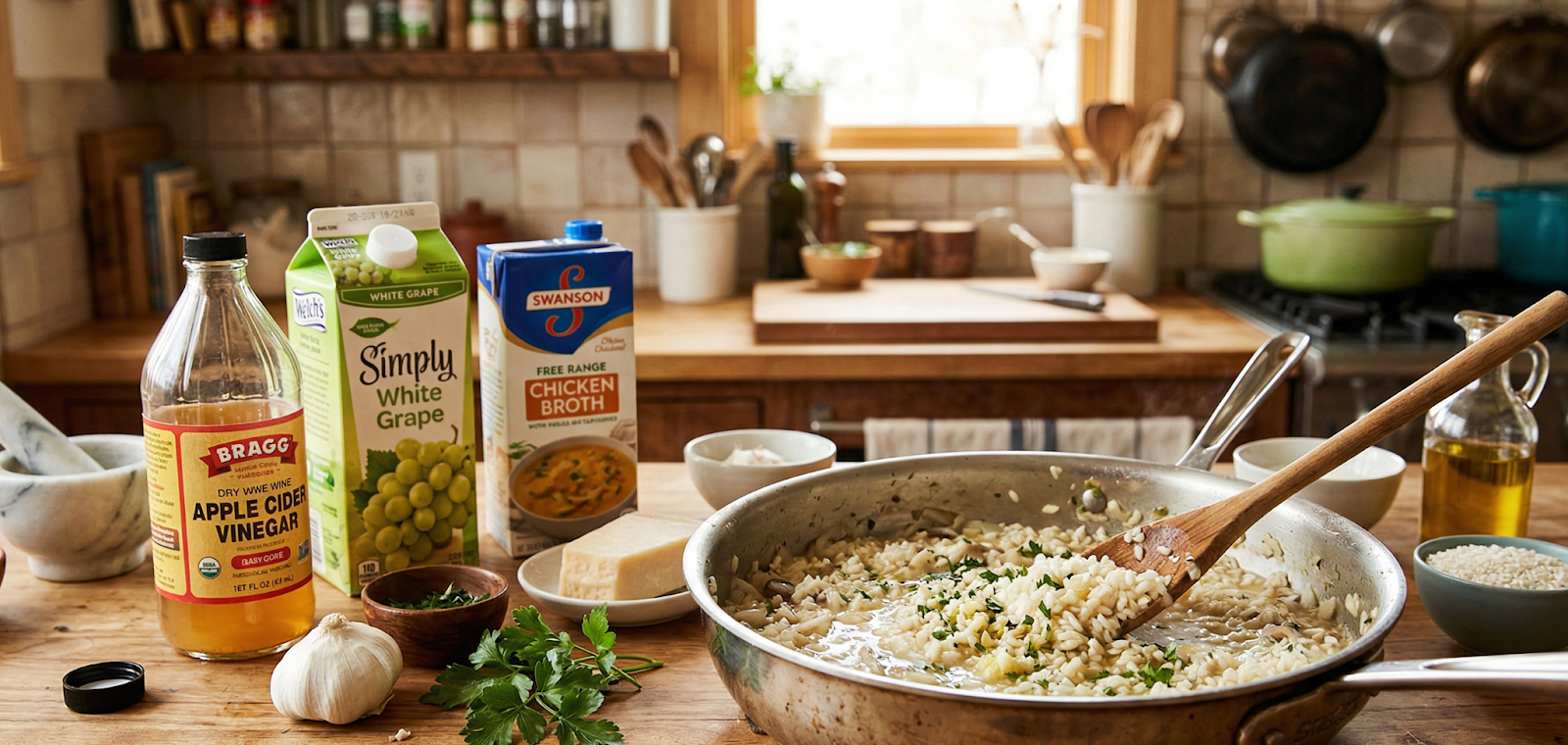
In risotto, wine often appears early, to add aroma and acidity before you drown the rice in broth.
If you don’t want wine:
Swap:
How:
Why at the end? Because cooking kills some brightness. Adding citrus at the end keeps the flavors lively.
Example:
Mushroom risotto, no wine:
In thewineoh.app, you can save this as:
“Go-to risotto base: no wine, finish with lemon: worked great.”
Dry white wine isn’t sweet, but it does contribute a gentle fruit note and a hint of sweetness. In some recipes, especially glazes or pan sauces, you might miss that if you only use broth + vinegar.
Enter juices.
Good choices:
You must adjust for sweetness:
Basic formula:
Great for:
Example:
Pork chops with wine pan sauce:
Taste: if it leans sweet, more vinegar; if too sharp, a bit more stock.
Log your favorite ratios in thewineoh.app: “Pork chops: apple juice/stock/cider vinegar 1:1 + 1 tsp perfect.”
Verjus = juice from unripe grapes. It’s naturally tart, not alcoholic, and tastes very wine-adjacent.
If you cook with wine a lot but don’t want alcohol, verjus is a dream ingredient.
Use it when:
How to use:
Not always in the supermarket, but worth hunting in specialty or online stores if you do a lot of wine-based cooking.
In creamy pasta sauces, wine’s main job is cutting the richness. It keeps the sauce from feeling cloying.
If you’re skipping the wine:
Try this:
Example:
Creamy garlic chicken pasta:
You’re aiming for that “not too heavy” feeling on your tongue.
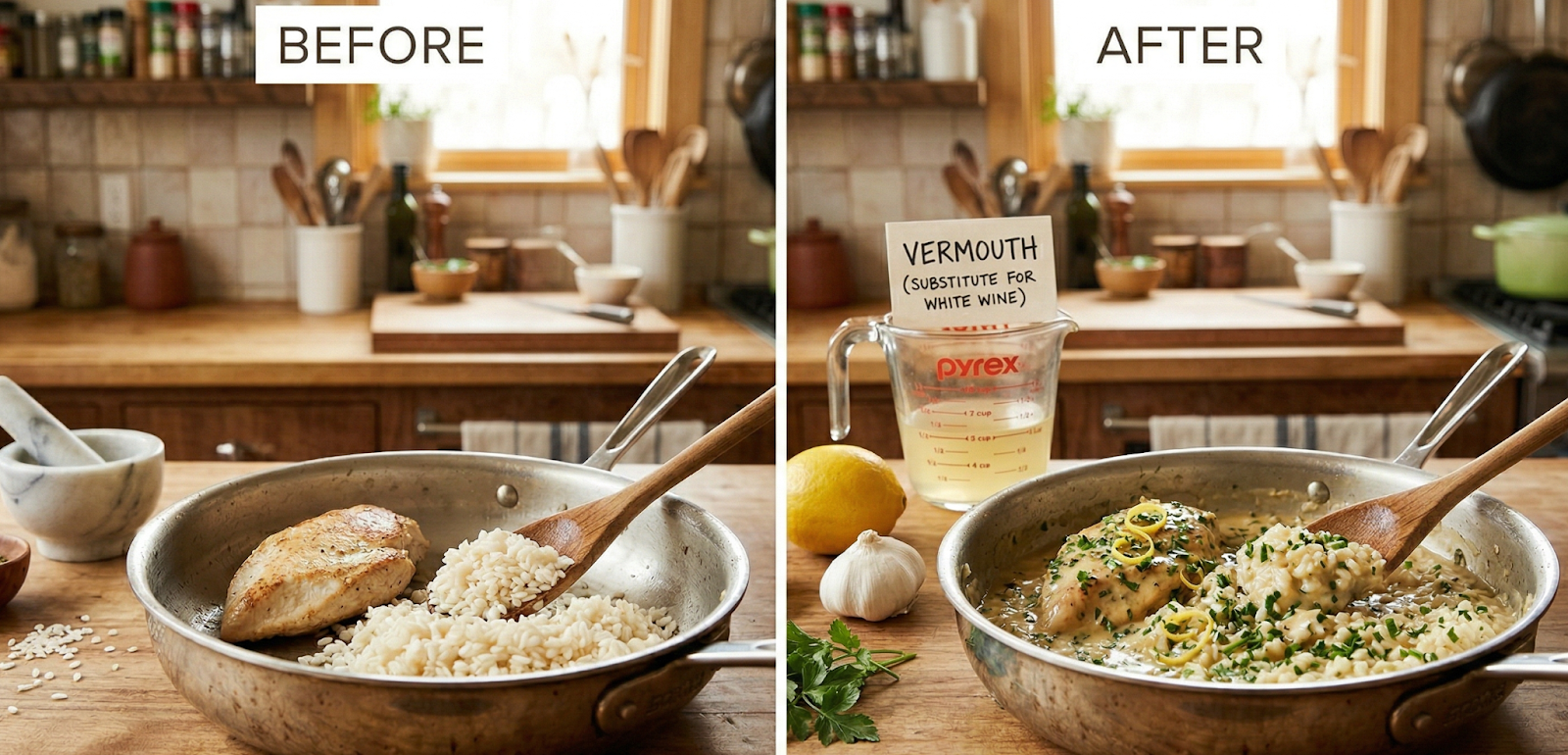
If all you’re doing is scraping up brown bits from a pan to make a quick sauce, you don’t need wine at all.
Those browned bits (fond) are the star. The liquid is the helper.
Simplest swap:
Rough guide:
This creates a light, bright sauce that still tastes like whatever you browned: chicken, mushrooms, pork, etc.
In marinades, wine is one of many acidic ingredients (often with citrus, yogurt, or vinegar) that help tenderize and flavor.
You can usually remove the wine and keep:
Example:
Herby chicken marinade with wine:
You still get acid, fat, and flavor; no one at the table knows the wine is missing.
Store your favorite marinades in thewineoh.app with notes like “no wine version: 10/10, family approved.”
Honestly? Sometimes you can.
If a recipe uses a tiny amount of wine (like 2–3 tablespoons) in something with lots of other strong flavors, you might not notice it missing at all.
In that case:
Cooking is as much about balance as it is about following instructions.
You can even create a custom “wine substitute starter pack” note inside thewineoh.app with your favorite combos.
Okay, friend-to-friend, here’s what often goes wrong:
If you’re nervous, here’s an easy way to experiment:
Log your result in thewineoh.app:
“Chicken in cream sauce: broth + lemon = 95% as good, no extra shopping needed.”
Over time, you’ll build your own “substitute brain” and you won’t need to think so hard.
Most of these swaps are 100% alcohol-free, but just to be super clear:
You can tag recipes in thewineoh.app as “alcohol-free version” so you don’t have to remember what you changed.
Cooking with wine is fun, but it’s not mandatory for flavor. Once you realize that “dry white wine” is basically “tangy, aromatic liquid,” you’re free. You can swap, adjust, and still make food that tastes restaurant-level.
And if you use thewineoh.app to keep track of which substitutes worked best in which recipe, you won’t have to re-experiment every time. You’ll just scroll your notes, smile, and cook.
.svg)



Influencer
November 19, 2025
Consumers are shifting toward cleaner, additive-free wine experiences. Organic vineyards are proving that sustainable farming can elevate taste and quality. Here’s why clean wines are becoming the new favorite for mindful drinkers worldwide.
Discover More
.webp)
Influencer
November 21, 2025
Beyond cheese and charcuterie, the world of unexpected wine pairings is exploding. From sushi to spicy street food, new combinations are surprising wine lovers everywhere. Discover bold pairings that elevate both the dish and the glass.
Discover More
Influencer
November 19, 2025
Winemakers are blending centuries-old craftsmanship with cutting-edge tech innovations. Smart fermentation, AI-based grape analysis, and climate-controlled aging are reshaping the industry. A behind-the-scenes look at how technology is redefining experience.
Discover More.webp)
Influencer
November 19, 2025
Across the globe, female winemakers and sommeliers are redefining leadership in the wine world. Their creativity, precision, and bold ideas are inspiring a new era of wine culture. Meet the women changing how the world thinks, tastes, and talks about wine.
Discover More


