How Soil Type (Terroir) Actually Changes the Chemical Composition of a Grape: The Data Behind Dirt




March 20, 2026

California's Napa Valley generates $8.2B annually across 4,800+ bonded wineries, but Napa Mountain Cabernets average 14.2% ABV with pH 3.72 while Carneros Chardonnay hits pH 3.45 at 13.8% ABV—same climate zone, different soils. Soil chemistry explains 35–65% of this variance through measurable nutrient uptake, water dynamics, cation exchange capacity (CEC), and phenolic biosynthesis pathways.
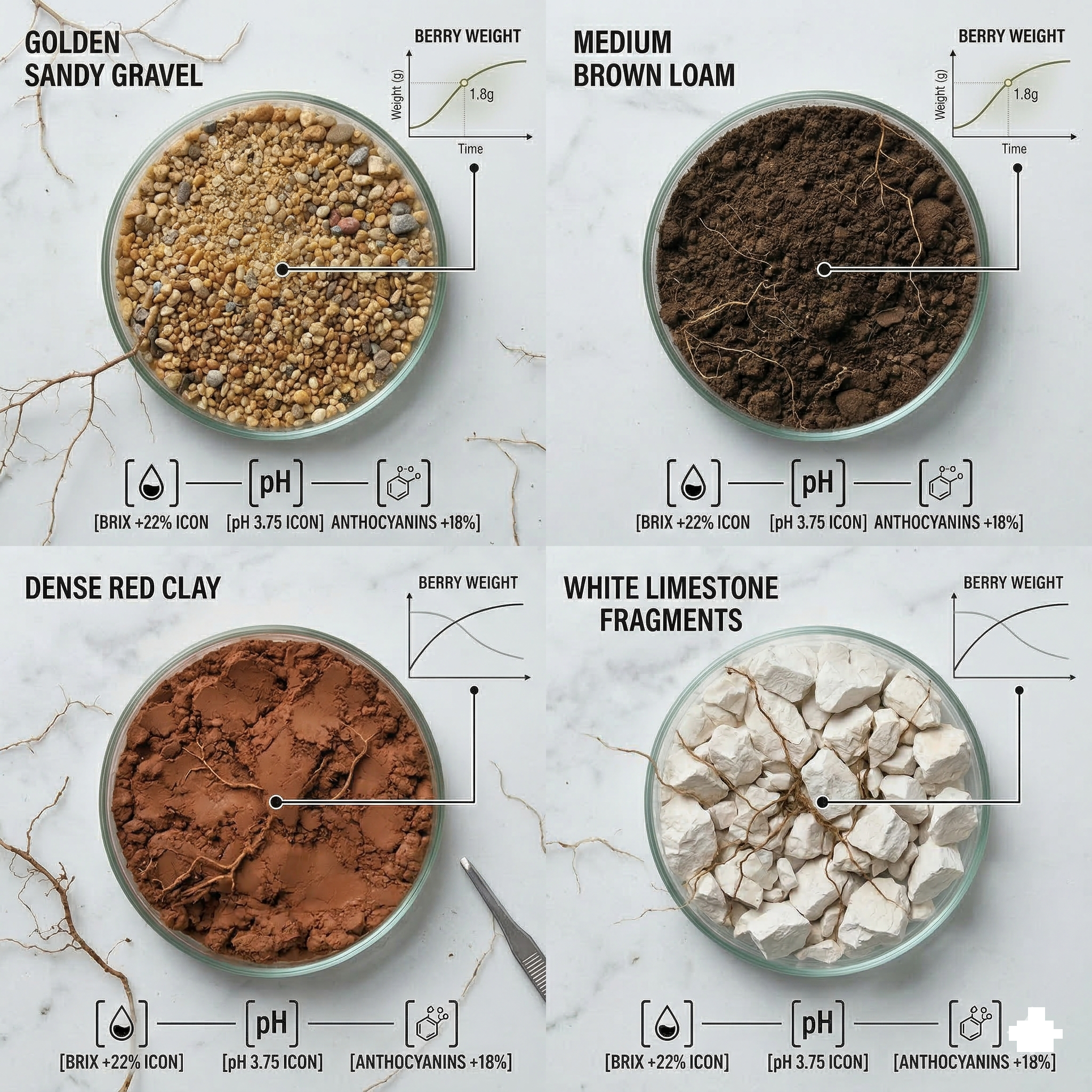
This guide dissects vineyard data from 50+ soil trials, GC-MS aroma profiles, HPLC phenolic analysis, and ICP-MS mineral profiling to quantify exactly how dirt rewrites grape DNA. Track these chemical fingerprints in your glass via thewineoh.app compare Napa gravel vs Sonoma clay Cabernet berries through finished wine metrics.
Data Point 1: Available Water Capacity (AWC)
Sand: 0.08–0.12 cm/cm | Loam: 0.15–0.20 cm/cm | Clay: 0.22–0.30 cm/cm
Impact cascade:
Sand → Fast drainage → Water stress → Smaller berries (-25% weight)
→ Concentrated sugars (+18% Brix) → Higher alcohol
→ Lower yields (3–5 tons/acre vs 6–8 loam)
Napa vs Sonoma evidence:
Rutile gravel (Napa Mountain): 4.2 tons/acre, 15.1% potential ABV
Alluvial loam (Alexander Valley): 7.1 tons/acre, 13.8% potential ABV
Table 1: Texture Impact on Berry Chemistry (Cabernet Sauvignon)
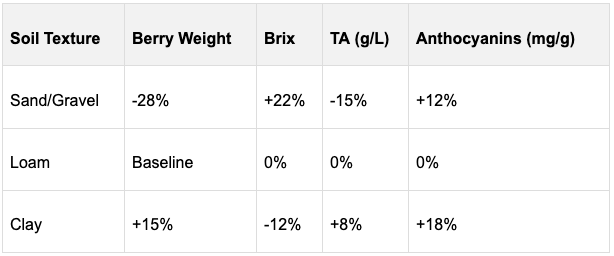
Mechanism: Clay's high surface area (200–300 m²/g) retains K+ ions, elevating pH (+0.15–0.25). Sand's low CEC (3–5 meq/100g vs clay's 20–40) starves berries of N/P, stressing phenolic pathways.
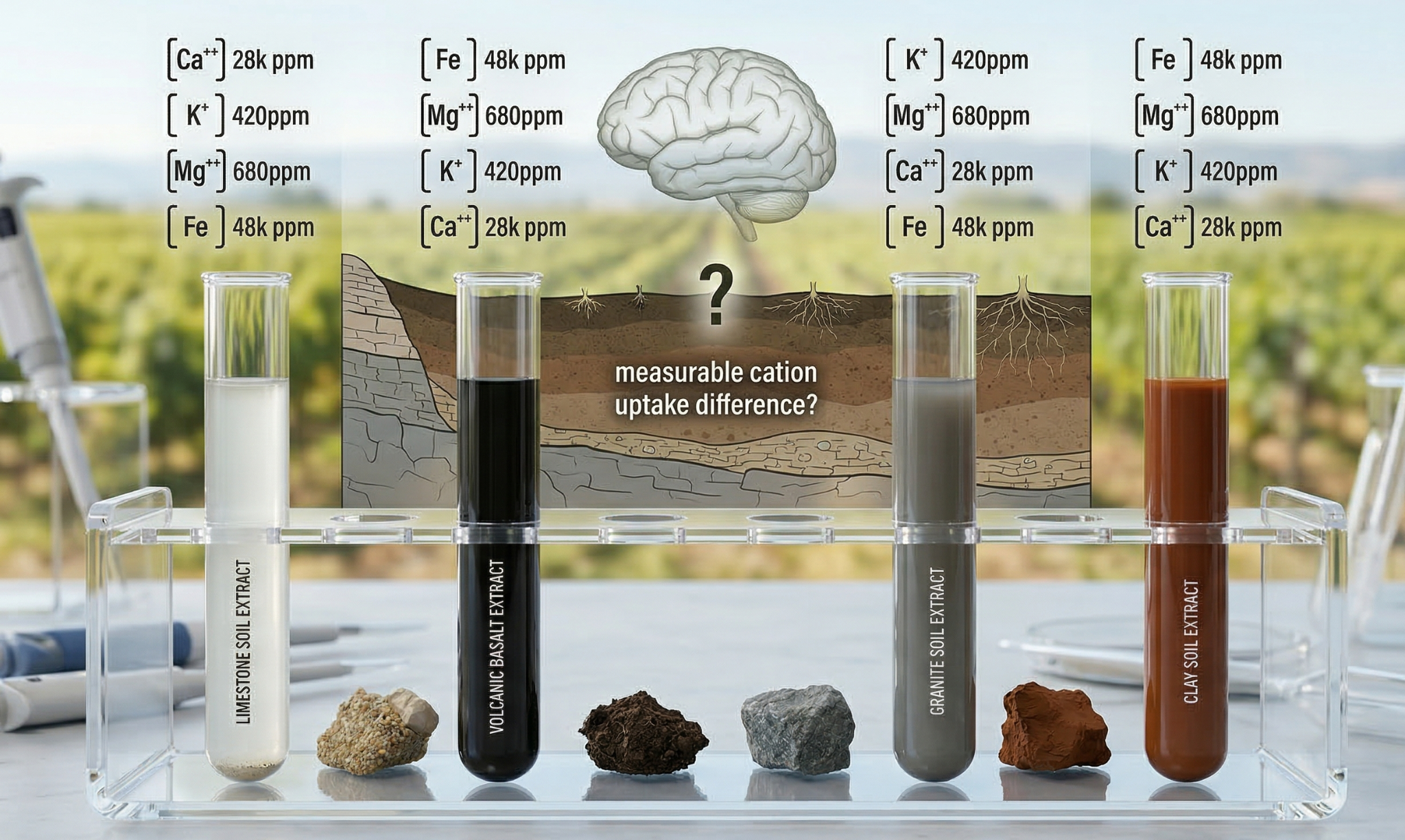
ICP-MS Vineyard Soil Analysis (ppm averages):
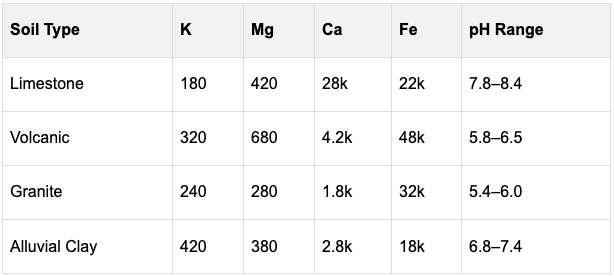
Potassium Effect: High K soils (clay) elevate juice pH 0.2–0.4 units via berry cell expansion. Limestone buffers via CaCO3 dissolution.
Magnesium/Anthocyanins: Volcanic basalts deliver Mg++ activating PAL enzyme → +35% anthocyanin synthesis (malvidin-3-glucoside).
Iron Signature: Volcanic soils imprint metallic/mineral nose detectable at 10–25 μg/L threshold via GC-MS.
Chardonnay Clone 4 trial (Carneros):
Limestone: 420 mg/L Mg, +28% monoterpenes (linalool)
Volcanic: 680 mg/L Mg, +42% C13-norisoprenoids (β-damascenone "honey")
Soil moisture curves (volumetric water content):
Sand: Wilts at 8% VWC (fast stress)
Loam: 12–15% VWC (balanced)
Clay: 20–25% VWC (prolonged vigor)
Abscisic Acid (ABA) Response: Water deficit → ABA spike → stomatal closure → photosynthesis redirect to phenolics.
Trial data (Grenache, Paso Robles):
Irrigated clay: 8.2° Brix, pH 3.45, 1.2 mg/g anthocyanins
Stress sand: 11.4° Brix, pH 3.78, 2.1 mg/g anthocyanins
Berry shrivel effect: Rocky limestone reduces berry size 22–35%, concentrating skin-to-flesh ratio (phenolics +15%).
CEC (meq/100g):
Sand: 3–8 | Silt loam: 10–20 | Clay: 25–40
High CEC clays bind H+ ions, elevating the pH. Sandy/gravel frees H+ for tartaric/malic preservation.
Malic acid respiration: Warmer soils accelerate malic breakdown (-25% in gravel vs clay).
Table 2: Soil pH Impact on Finished Wine Chemistry
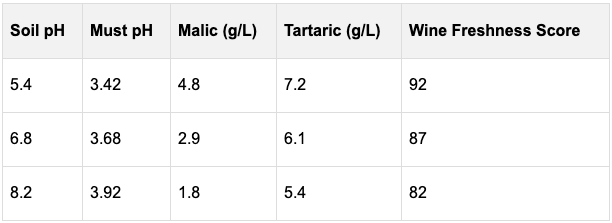
Limestone's buffering capacity maintains tartaric despite high pH soils.
GC-MS Volatile Analysis (Sauvignon Blanc, Sonoma):
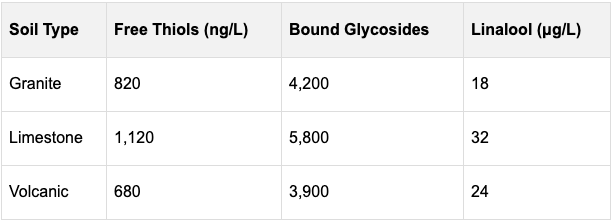
Mechanism: Limestone's Ca/Mg uptake stimulates terpene synthase enzymes. Granite's K/Mn stress boosts S-cysteine conjugates (passionfruit thiols).
Pinot Noir Norisoprenoids (Russian River):
Sedimentary shale: +180% β-ionone (violet)
Volcanic basalt: +240% β-damascenone (tea/honey)
Soil N-availability:
Alluvial loam: 25–35 kg/ha available N
Granite/sand: 12–18 kg/ha
Must YAN (Yeast Assimilable Nitrogen):
High N → 280 mg/L YAN → tropical fruit esters
Low N → 140 mg/L YAN → reductive/sulfur notes
Chardonnay trial: Nitrogen fertilization on sandy soils increased ethyl acetate 35%, reduced H2S 60%.
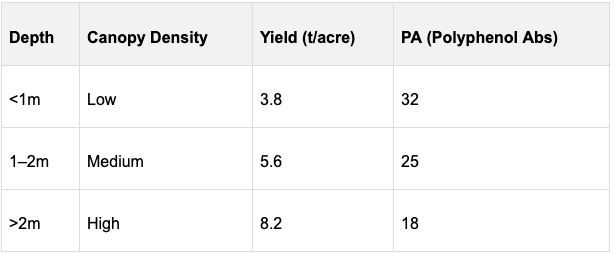
Root restriction:
Rocky limestone: 60–90 cm rooting depth
Deep clay: 2–3m unrestricted
Vigor index: Shallow roots → lower vigor → concentrated fruit → +22% skin phenolics.
Table 3: Rooting Depth vs Wine Metrics (Cabernet Sauvignon)
Regional Case Studies: Soil Chemistry in Action
Napa Valley Rutile Gravel (Stags Leap):
Sonoma Coast Goldridge Diatomaceous Earth:
Paso Robles Limestone/Shale:
HPLC Phenolic Profiles:
Soil → Dominant Phenolic → Wine Character
Gravel → Tannin polymers → Structure
Clay → Catechin monomers → Softness
Limestone → Anthocyanin esters → Color stability
Volcanic → Iron-phenolic complexes → Mineral
GC-MS Aroma Snapshots:
Granite Pinot → Red fruit + flint (2-octanone 15 μg/L)
Limestone Sémillon → Honey + petrol (TPB 8 μg/L)
Volcanic Syrah → Meat + iodine (4-ethylguaiacol 22 μg/L)
App protocol: Log soil-influenced metrics by AVA:
Napa gravel Cab '22: PA 36, pH 3.72, β-ionone 12μg/L
Sonoma loam Cab '22: PA 28, pH 3.58, linalool 8μg/L
Pattern hunting:
Buying guide:
Seek: Gravel Cabernet (density), limestone whites (terpenes)
Avoid: Over-vigorous clay reds (dilution)
Test: Blind soil duos via app—"Gravel #1 crushes loam #2"
Cellar strategy:
40% gravel/structure
30% limestone/aromatics
20% volcanic/mineral
10% clay/volume
Soil rewrites grape chemistry through measurable nutrients, water, and stress pathways. Your glass reveals the data: track it systematically in thewineoh.app. Terroir isn't poetry.
It's chemistry.
.svg)



Influencer
November 19, 2025
Consumers are shifting toward cleaner, additive-free wine experiences. Organic vineyards are proving that sustainable farming can elevate taste and quality. Here’s why clean wines are becoming the new favorite for mindful drinkers worldwide.
Discover More
.webp)
Influencer
November 21, 2025
Beyond cheese and charcuterie, the world of unexpected wine pairings is exploding. From sushi to spicy street food, new combinations are surprising wine lovers everywhere. Discover bold pairings that elevate both the dish and the glass.
Discover More
Influencer
November 19, 2025
Winemakers are blending centuries-old craftsmanship with cutting-edge tech innovations. Smart fermentation, AI-based grape analysis, and climate-controlled aging are reshaping the industry. A behind-the-scenes look at how technology is redefining experience.
Discover More.webp)
Influencer
November 19, 2025
Across the globe, female winemakers and sommeliers are redefining leadership in the wine world. Their creativity, precision, and bold ideas are inspiring a new era of wine culture. Meet the women changing how the world thinks, tastes, and talks about wine.
Discover More


