Orange Wine: What It Is and Should You Try It?




April 14, 2026

Okay, let’s get straight: orange wine is not made from oranges.
If you clicked this expecting a citrusy, sunny breakfast-in-a-glass situation, I’m sorry to disappoint. But stick with me, because what orange wine actually is might be even cooler. It’s weird, it’s ancient, it’s having a major moment, and honestly? It might be the most interesting thing you’ll drink all year.
You’ve probably seen it on a trendy wine list or spotted an amber-hued bottle at your local shop and thought, “Is this a typo? Did someone leave white wine in the sun?” Nope. It’s intentional. And once you get the story behind it, you’ll never look at wine the same way again.
Let’s break it down: no snobbery, no confusing jargon, just the real deal. And if you’re the type who likes to know why before you try, we’ve got your back over at TheWineOh, where we make wine make sense.
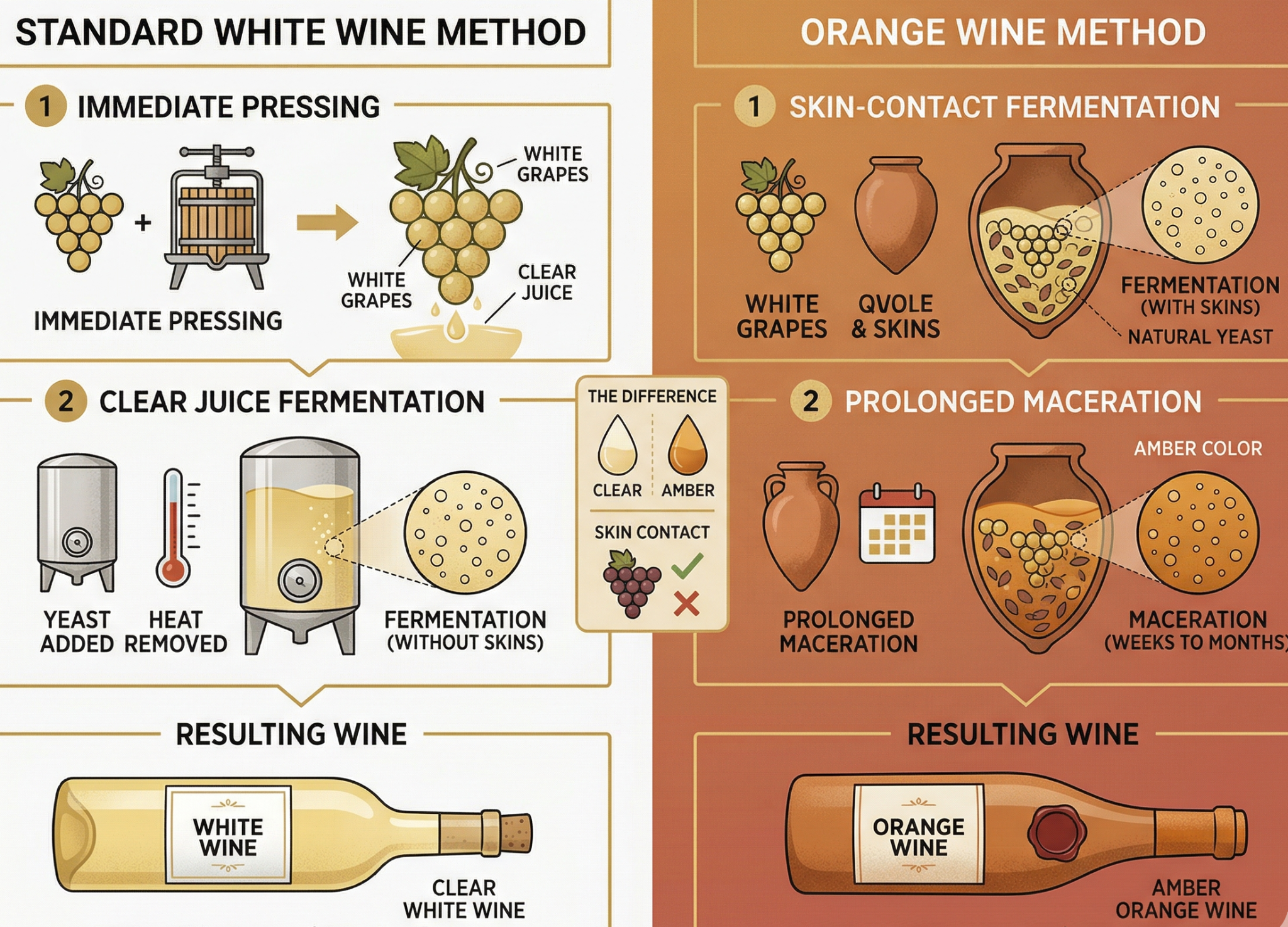
Here’s the simple version: orange wine is white wine made like red wine.
Boom. That’s the whole secret.
Normally, when you make white wine, you press the grapes and immediately separate the juice from the skins. The juice ferments on its own, which gives you that crisp, clean, pale-yellow color. Think Pinot Grigio or Sauvignon Blanc.
With red wine, you leave the juice in contact with the grape skins (and sometimes seeds and stems) during fermentation. That’s where red wine gets its color, tannins, and that grippy texture.
Orange wine? It’s made from white grapes, but the winemaker leaves the skins in contact with the juice for days, weeks, or even months. That skin contact pulls out color (ranging from deep gold to burnt orange to amber), tannins (that drying sensation you usually get from reds), and a whole bunch of complex flavors you’d never expect from white wine.
It’s basically white wine that went to the gym, read some philosophy, and came back with opinions.
The technical term is skin-contact white wine, but let’s be real “orange wine” is way more fun to say.
Here’s the plot twist: orange wine isn’t some new hipster invention. It’s actually the original wine.
We’re talking 8,000 years old.
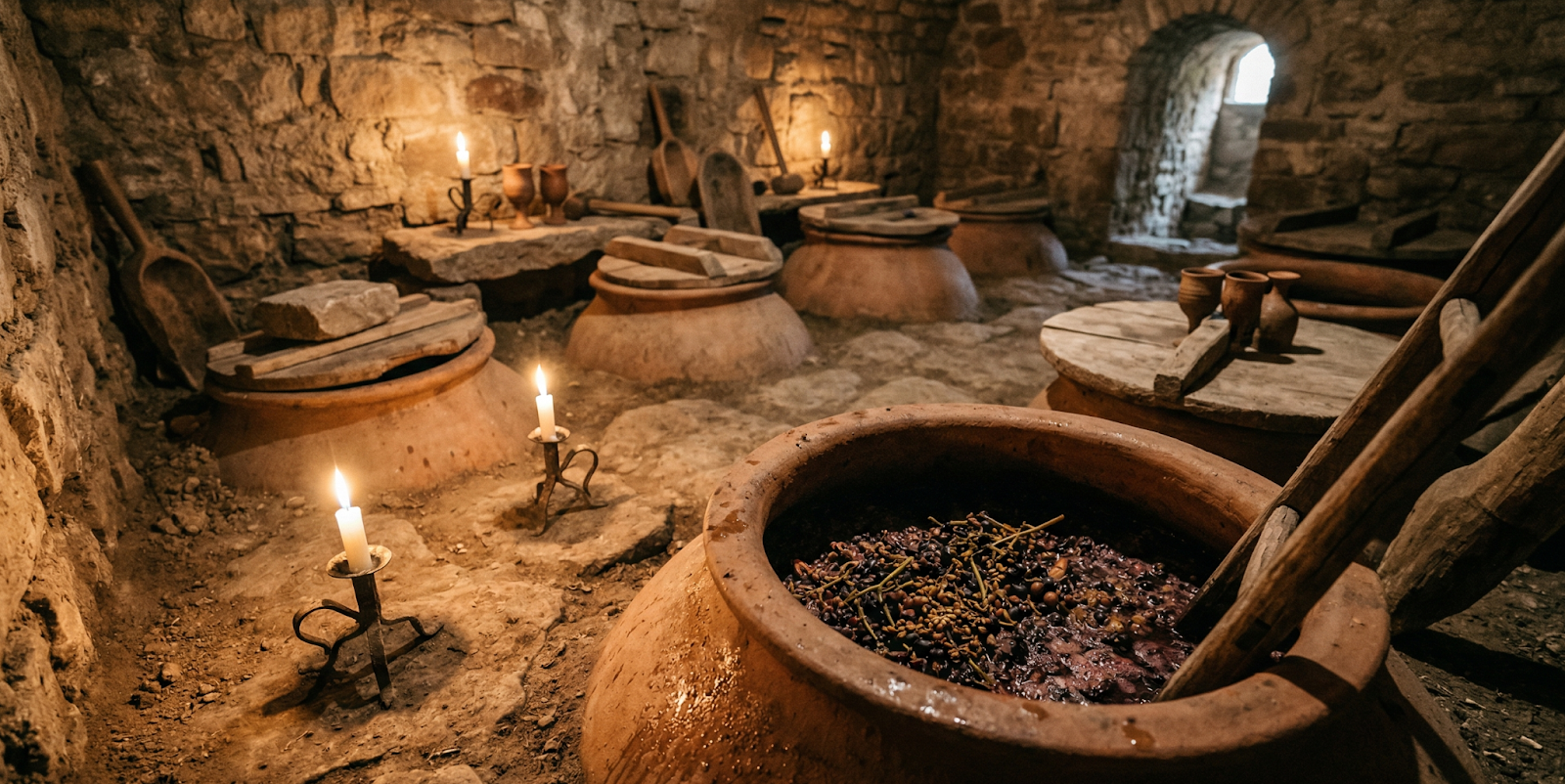
The story starts in Georgia (the country, not the state). Georgian winemakers were making wine in giant clay vessels called qvevri (pronounced “kveh-vree”) buried underground as far back as 6000 BC. They’d crush white grapes, dump everything; juice, skins, seeds, stems into these clay jars, seal them up, and let it ferment for months. No temperature control. No fancy equipment. Just time and terroir.
The result? A deep amber wine that was tannic, complex, and could age for decades. This wasn’t a stylistic choice. It was just… how wine was made.
For thousands of years, this was the norm across the Caucasus region (Georgia, Armenia, Slovenia, parts of Italy). Then, as winemaking technology advanced, people started separating skins from juice to make cleaner, lighter, more “stable” white wines. Orange wine got pushed to the sidelines, surviving mostly in remote villages where tradition ruled.
Fast-forward to the early 2000s. A few adventurous winemakers in Italy’s Friuli region and Slovenia rediscovered these ancient methods. They started experimenting with skin contact again, but this time with modern precision. The wine world took notice. Critics called it “the next big thing.” Sommeliers started putting it on lists. And just like that, the oldest wine style became the hottest trend.
Alright, the moment of truth: what are you actually drinking?
If you’re expecting a sweet, fruity white, prepare to be surprised. Orange wine is… different. It’s bold. It’s textured. It doesn’t play by the usual rules.
Here’s what you can generally expect:
It’s not sweet, though. Most orange wines are bone-dry. The fruit flavors are more dried and concentrated than juicy and fresh.
This is where it gets wild. Because of that skin contact, orange wine has tannins. You know that slightly drying, grippy feeling you get from red wine? Yeah, that. But on a white wine.
It’s fuller-bodied than your average Pinot Grigio. More structured. More serious. It demands food. It demands attention.
Ranges from pale gold (light skin contact) to deep amber or even reddish-orange (extended maceration). It’s gorgeous in the glass, especially when the light hits it.
Think of it like this: if white wine is a light, acoustic song and red wine is a full rock band, orange wine is a jazz fusion experiment. It’s got layers. It’s got an edge. It’s got personality.
Not sure if this flavor profile matches your taste? We’ve got a quick, fun quiz on TheWineOh that matches your flavor preferences to wines you’ll actually love; orange, red, white, or otherwise.
Good question. Orange wine has been around for millennia, so why the hype now?
A few reasons:
Orange wine is often (but not always) made with minimal intervention. No added yeast. No fancy filters. No chemical adjustments. Just grapes, time, and maybe a little sulfur. That aligns perfectly with the natural wine trend, where drinkers want transparency and authenticity over perfection.
Sommeliers were early adopters because orange wine is food-friendly in a way that few wines are. Those tannins and savory notes mean it can stand up to bold flavors; spicy food, fermented dishes, rich meats that would crush a delicate white wine. It’s become a secret weapon on trendy restaurant lists.
Let’s be honest: it’s different. In a sea of same-old Chardonnays and Sauvignon Blancs, orange wine stands out. It’s a conversation starter. It’s Instagrammable. It makes you look like you know something your friends don’t.
Wine drinkers are getting more adventurous. People want wines with story, texture, and depth. Orange wine delivers all three. It’s not just a drink; it’s an experience.
Here’s my honest take: yes, but go in with the right expectations.
If you love crisp, light, refreshing whites and hate anything tannic or funky, orange wine might not be your new everyday pour. And that’s okay. Not every wine is for every person.
But if you’re curious. If you like trying new things. If you’ve ever thought, “I wish white wine had more body” or “I want something that pairs with more than just salad” then absolutely, give it a shot.
Orange wine is for the adventurous drinker. The one who’s tired of the same old options. The one who wants to taste something that feels both ancient and cutting-edge at the same time.
And here’s the best part: you don’t need to spend a fortune. While some premium orange wines can get pricey, there are plenty of approachable bottles under $25 that are perfect for your first try. We highlight those exact bottles (and tell you which ones to skip) on TheWineOh, so you don’t waste money on duds.
Alright, you’ve got a bottle. Now what? Here’s how to make the most of it:
Not ice-cold like a cheap Pinot Grigio. Aim for about 55–60°F (cellar temperature). Too cold, and you’ll mute all those complex flavors. Too warm, and it’ll taste boozy and flat.
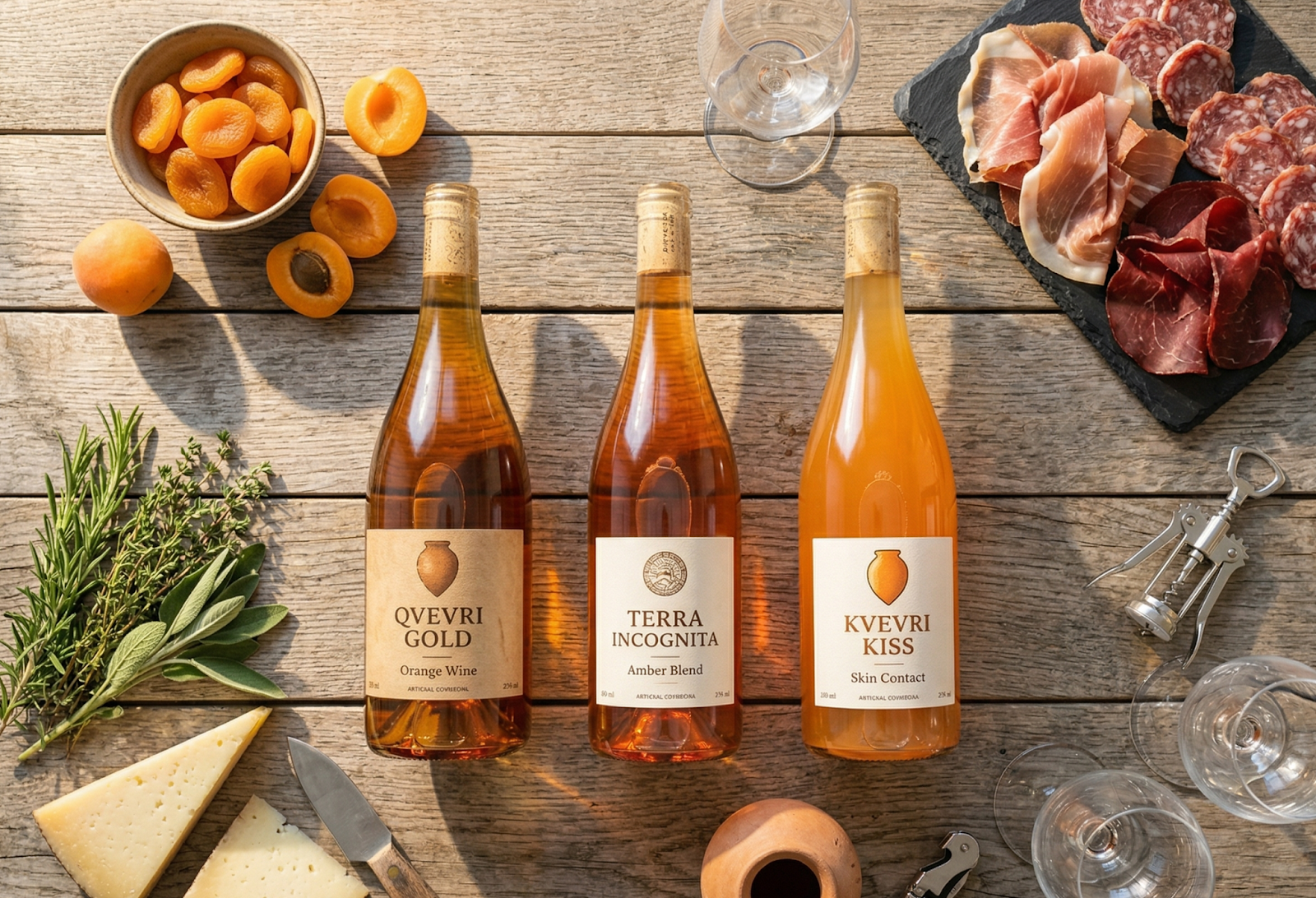
This is where orange wine shines. Think:
The tannins cut through fat. The savory notes complement umami. The acidity balances spice. It’s a pairing powerhouse.
A standard white wine glass works fine. If you want to get fancy, use a larger bowl (like a Burgundy glass) to let it breathe and open up those aromas.
If the wine tastes a bit tight or closed when you first open it, give it 20–30 minutes in a decanter. It’ll soften and reveal more layers. Not all orange wines need this, but bolder ones definitely benefit.
Not all orange wines are created equal. Some are wild, funky, and challenging. Others are approachable and delicious right out of the gate. If you’re new to this, start with the latter.
Here are three styles to look for:
“Ramato” means “coppery” in Italian. This is basically Pinot Grigio with brief skin contact, giving it a pinkish-orange hue and a bit more texture than standard PG. It’s fruity, fresh, and super easy to drink. Perfect gateway orange wine.
This grape is the poster child for modern orange wine. Look for bottles from Friuli or Slovenia’s Brda region. Expect apricot, orange peel, and a nice tannic grip without being overwhelming.
New World winemakers are experimenting with orange styles too. These tend to be fruit-forward and less funky than their Old World counterparts, making them great for first-timers.
Want specific bottle recommendations that are actually available in your area? That’s exactly what we do on TheWineOh curated picks, real availability, zero guesswork.
Let’s bust a few quick myths before you go:
Myth 1: Orange wine is sweet.
Nope. Most are bone-dry. The orange color comes from skins, not sugar.
Myth 2: It’s a fad that’ll disappear.
Unlikely. It’s been around for 8,000 years. If it survived the Middle Ages, it’ll survive Instagram.
Myth 3: You need to be a wine expert to appreciate it.
Absolutely not. You just need an open mind and a willingness to try something different.
Myth 4: All orange wines are funky and weird.
Some are, sure. But many are balanced, delicious, and totally approachable. It’s all about picking the right bottle.
Orange wine is not for everyone. But it might be for you.
It’s bold, textured, complex, and unapologetically different. It’s a bridge between white and red wine. It’s a taste of ancient history wrapped in a modern trend. And honestly? It’s one of the most exciting categories in wine right now.
Should you try it? If you’re curious, adventurous, or just tired of the same old options: absolutely. Start with a lighter style, pair it with good food, and see what you think. Worst case, you learn something. Best case, you find your new favorite wine.
And if you want to explore orange wine (or any wine) without the confusion, the snobbery, or the wasted money on bottles you don’t like, we built TheWineOh for exactly that. Think of it as your wine bestie who actually knows their stuff but won’t make you feel bad for asking “dumb” questions.
We’ve got region guides, food pairing cheat sheets, personalized recommendations, and a community of real wine lovers who actually reply when you ask for advice. So go ahead. Grab a bottle of orange wine. Pour yourself a glass. And join the thousands of drinkers who’ve already discovered that the best wine is the one that surprises you.
.svg)



Influencer
November 19, 2025
Consumers are shifting toward cleaner, additive-free wine experiences. Organic vineyards are proving that sustainable farming can elevate taste and quality. Here’s why clean wines are becoming the new favorite for mindful drinkers worldwide.
Discover More
.webp)
Influencer
November 21, 2025
Beyond cheese and charcuterie, the world of unexpected wine pairings is exploding. From sushi to spicy street food, new combinations are surprising wine lovers everywhere. Discover bold pairings that elevate both the dish and the glass.
Discover More
Influencer
November 19, 2025
Winemakers are blending centuries-old craftsmanship with cutting-edge tech innovations. Smart fermentation, AI-based grape analysis, and climate-controlled aging are reshaping the industry. A behind-the-scenes look at how technology is redefining experience.
Discover More.webp)
Influencer
November 19, 2025
Across the globe, female winemakers and sommeliers are redefining leadership in the wine world. Their creativity, precision, and bold ideas are inspiring a new era of wine culture. Meet the women changing how the world thinks, tastes, and talks about wine.
Discover More


