Canned Wine Review: 10 Best Cans of 2026 (Yes, They’re Actually Good Now)




April 12, 2026

Let’s address the elephant in the room: Yes, wine in a can used to taste like someone poured a box of Two Buck Chuck into a soda can and hoped for the best.
But that was then. This is 2026. And canned wine? It’s having a full-on renaissance.
We’re not talking about sugary, fizzy wine coolers disguised as cans. We’re talking about real wine, from real wineries, in real 250ml and 375ml cans: that tastes crisp, complex, and shockingly close to the bottled stuff. Sometimes better, actually (more on that in a sec).
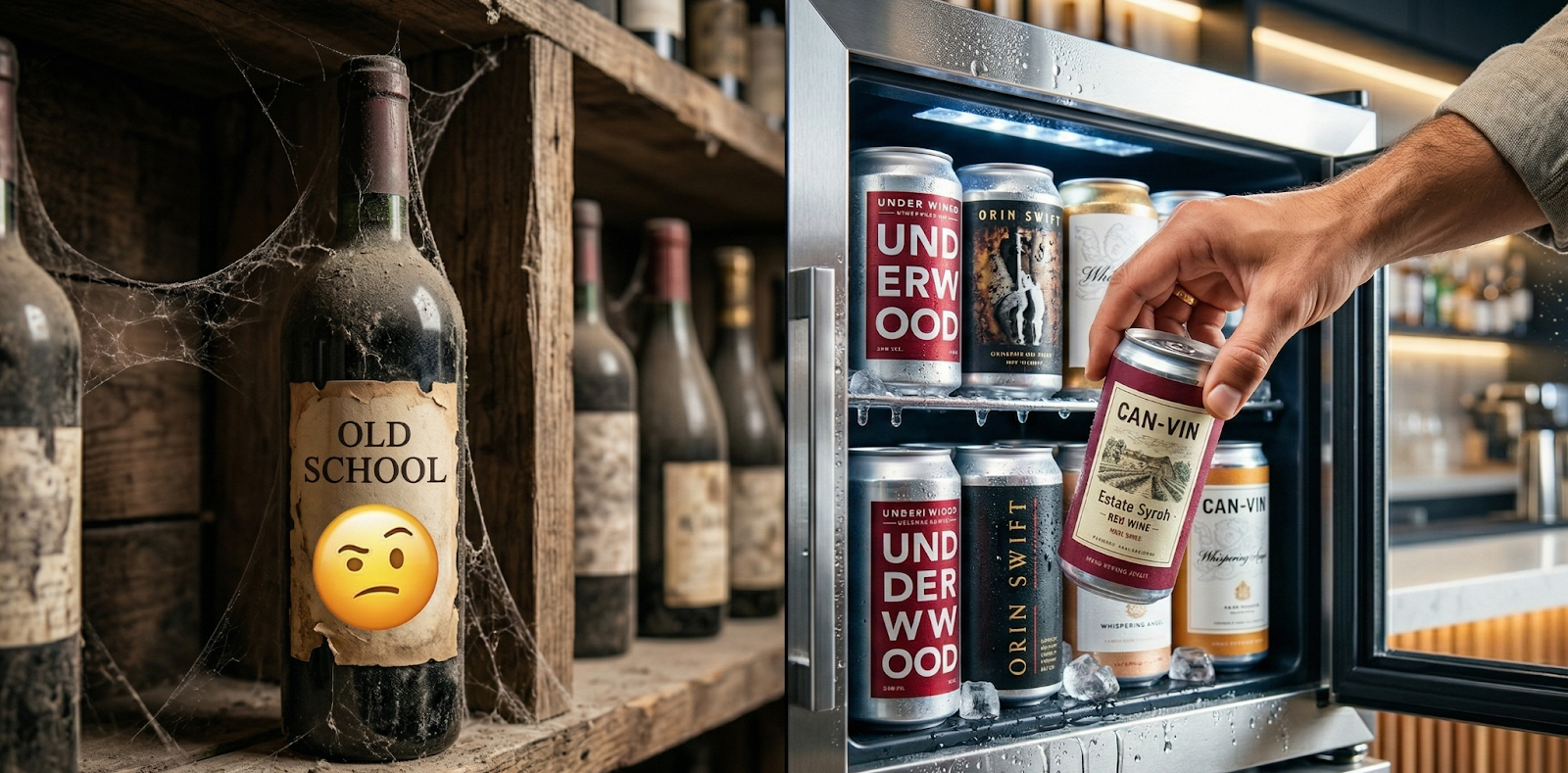
Why the shift? Convenience, sure. But also sustainability, portion control, and the fact that aluminum blocks 100% of light and oxygen; the two biggest enemies of wine. A clear glass bottle? It’s basically a sunlight smoothie for your Pinot Grigio. A can? It’s a fortress.
I spent the last three months taste-testing everything from grocery store staples to cult natural wine cans. Some were… fine. Some were genuinely shocking (in a good way). And some are now permanent residents in my fridge.
Here are the 10 best canned wines of 2026, broken down by style, occasion, and “would I actually serve this to a friend?” factor. And because cans disappear fast (no “half a bottle left for tomorrow”), I’ll show you how to log your favorites in thewineoh.app so you never forget which one nailed your picnic last summer.
Ready to ditch the corkscrew? Let’s pop some tabs.
Before we dive into the list, here’s the framework:
No obscure, limited-edition drops. Just stuff you can get tonight.
Price: $5/can (4-pack for $18)
ABV: 12.5%
Tastes Like: Green apple, lemon zest, wet stone, clean finish.
Why It Wins: Underwood (from King Estate) basically invented the modern canned wine category. This Pinot Grigio is crisp, not watery. It has actual acidity. No metallic aftertaste. It’s the white you grab for a beach day, a solo Tuesday, or a “I don’t want to open a whole bottle” moment.
Perfect With: Shrimp salad, solo sushi, or straight from the cooler.
Verdict: 9/10. The gold standard.
Price: $8/can
ABV: 13.9%
Tastes Like: Blackberry, dark chocolate, vanilla, soft tannins.
Why It Wins: Dave Phinney (the genius behind Prisoner) makes this. It’s bold, complex, and doesn’t taste “canned” at all. The 375ml size is perfect for two people or one ambitious solo drinker. It’s the first canned red I’d serve at a dinner party (no shame).
Perfect With: Burgers, grilled steak, or cozy couch nights.
Verdict: 9.5/10. Red wine skeptics, start here.
Price: $6/can
ABV: 13%
Tastes Like: Strawberry, watermelon, citrus, dry finish.
Why It Wins: It’s the same wine as the bottle. Same Provence blend. Same crisp, dry profile. No sweetness, no artificial pink nonsense. It’s the rosé you’ve loved for years, now portable.
Perfect With: Pool days, charcuterie, or pretending you’re in the South of France on your balcony.
Verdict: 9/10. The safe bet that never disappoints.
Price: $5/can
ABV: 11.5%
Tastes Like: Raspberry, brioche, fine bubbles, dry (not sweet).
Why It Wins: Cava in a can. Actual method traditionnelle bubbles. Dry, not cloying. The can makes it chill faster, and the single-serve size means you can pop one for brunch without wasting half a bottle.
Perfect With: Brunch, celebrations, or “I survived Monday” rewards.
Verdict: 8.5/10. Best bang for your bubbly buck.
Price: $7/can
ABV: 12.8%
Tastes Like: Orange peel, apricot, tea, funky (in a good way).
Why It Wins: For the natural wine nerds. Skin-contact (orange wine) in a can is rare. This one is funky, fresh, and actually interesting. No additives, low sulfites, and the can protects the delicate natural wine from oxidation better than a clear bottle ever could.
Perfect With: Spicy Thai, weird cheeses, or pretentious wine nights (the fun kind).
Verdict: 8/10. Niche, but brilliant.
Price: $3.50/can
ABV: 13.5%
Tastes Like: Black cherry, plum, hint of oak, smooth finish.
Why It Wins: It’s $3.50. And it’s… good? Like, genuinely drinkable. Not complex, but not harsh or metallic. It’s the perfect “I need a glass of red while cooking” wine.
Perfect With: Pasta night, solo sipping, or camping trips where you might lose a bottle.
Verdict: 7.5/10. Best value in the game.
Price: $4/can
ABV: 9%
Tastes Like: Peach, orange blossom, honey, light fizz.
Why It Wins: It’s basically a grown-up soda. Low alcohol, sweet but not syrupy, and the can makes it feel less guilty than a cocktail. Perfect for people who think they “don’t like wine.”
Perfect With: Dessert, spicy food, or hot summer afternoons.
Verdict: 7/10. Not for snobs, but perfect for its audience.
Price: $5/can
ABV: 12%
Tastes Like: Strawberry, melon, crisp, light.
Why It Wins: Lightweight, unbreakable, and recyclable. House Wine donates a portion of profits to clean water initiatives, so you’re drinking rosé and saving the planet. Plus, it tastes fresh, not skunky, even after bouncing around in your backpack.
Perfect With: Hikes, beach days, festivals, or anywhere glass is banned.
Verdict: 8/10. The adventure companion.
Price: $5/can
ABV: 13%
Tastes Like: Vanilla, butter, ripe pear, toasted oak.
Why It Wins: If you love oaked Chardonnay, this is your can. It’s rich, creamy, and actually has oak influence (not just flavoring). The can size is perfect for pairing with a single chicken breast or lobster tail without opening a whole bottle.
Perfect With: Roast chicken, lobster, or creamy pasta.
Verdict: 8/10. Buttery goodness, portable.
Price: $6/can
ABV: 7%
Tastes Like: Red fruit, light fizz, hint of herbs, refreshing.
Why It Wins: It’s wine + seltzer. Not a hard seltzer (those are beer-based). It’s actually wine carbonated for a spritz-like effect. Perfect for people who want wine flavor but lighter, fizzier refreshment.
Perfect With: Hot days, pool parties, or when you want something lighter than wine but fancier than seltzer.
Verdict: 7.5/10. Weird, but wonderful.
Myth #1: “Canned wine tastes like aluminum.”
Truth: Not anymore. Modern cans have a food-grade liner that prevents any metal contact. If it tastes metallic, it’s a bad batch, not the norm.
Myth #2: “It’s cheap, low-quality wine.”
Truth: Some are. But many (like Orin Swift, Underwood, Whispering Angel) are the exact same wine as the bottle, just packaged differently.
Myth #3: “Cans aren’t recyclable.”
Truth: Aluminum is the most recyclable material on earth (more than glass). It’s recycled at 2x the rate of glass and can be back on shelves in 60 days.
Myth #4: “It’s only for camping.”
Truth: It’s for portion control, sustainability, convenience, and avoiding waste. Also, camping. But also: picnics, solo nights, boats, pools, festivals, and “I don’t want to commit to a bottle” Tuesdays.
Here’s the science bit: Wine’s two biggest enemies are oxygen and light.
For single-serve wine, cans are objectively superior. No oxidation after opening (because you drink the whole thing). No light strike. No cork taint.
The only downside? You can’t reseal it. But that’s also the point: one can = one perfect glass. No half-empty bottles going bad in the fridge.
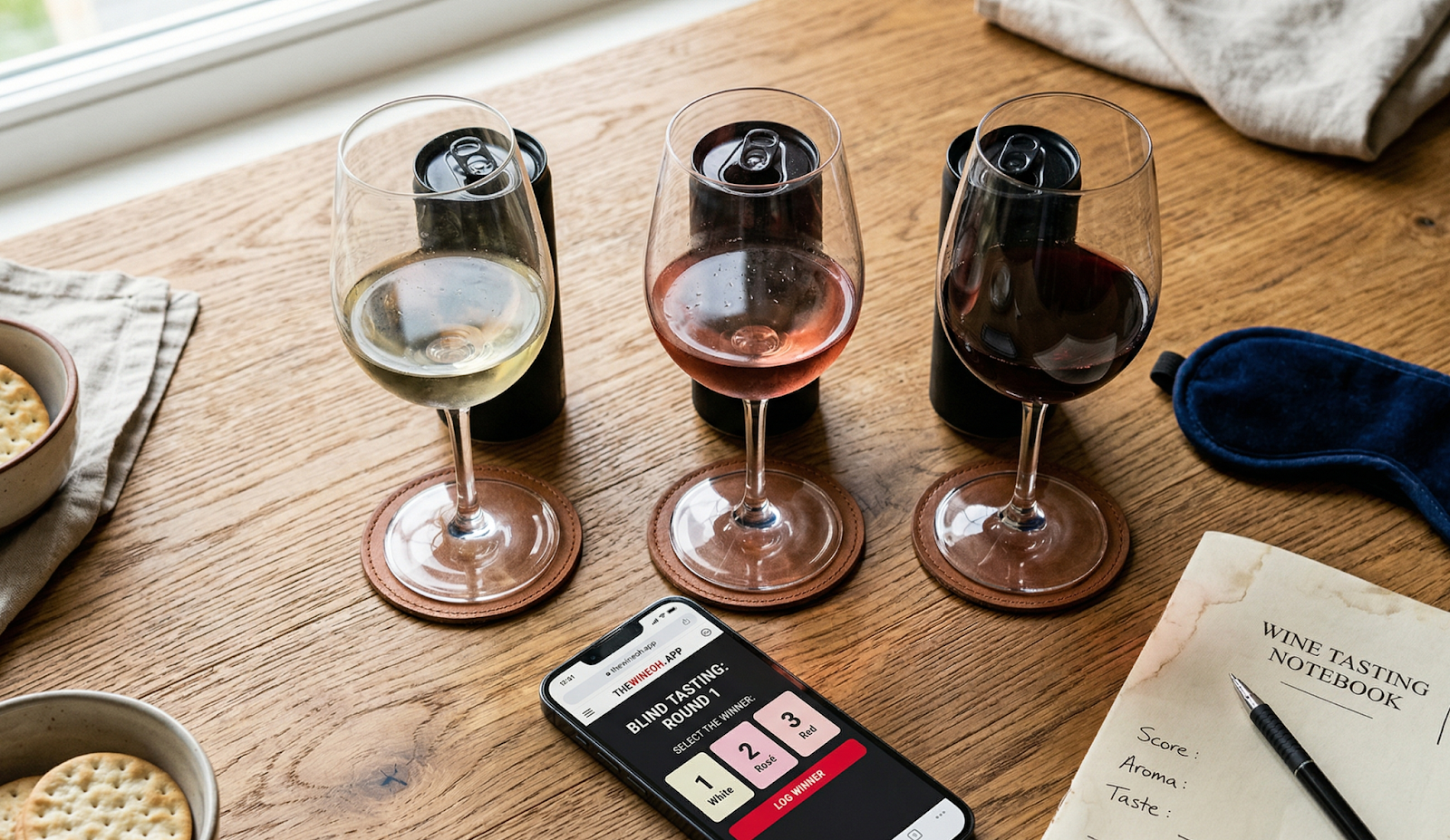
And please, for the love of wine, pour it into a glass. Yes, you can drink from the can. But your nose is 80% of taste. Pour it, let it breathe for 2 minutes, and you’ll taste 20% more.
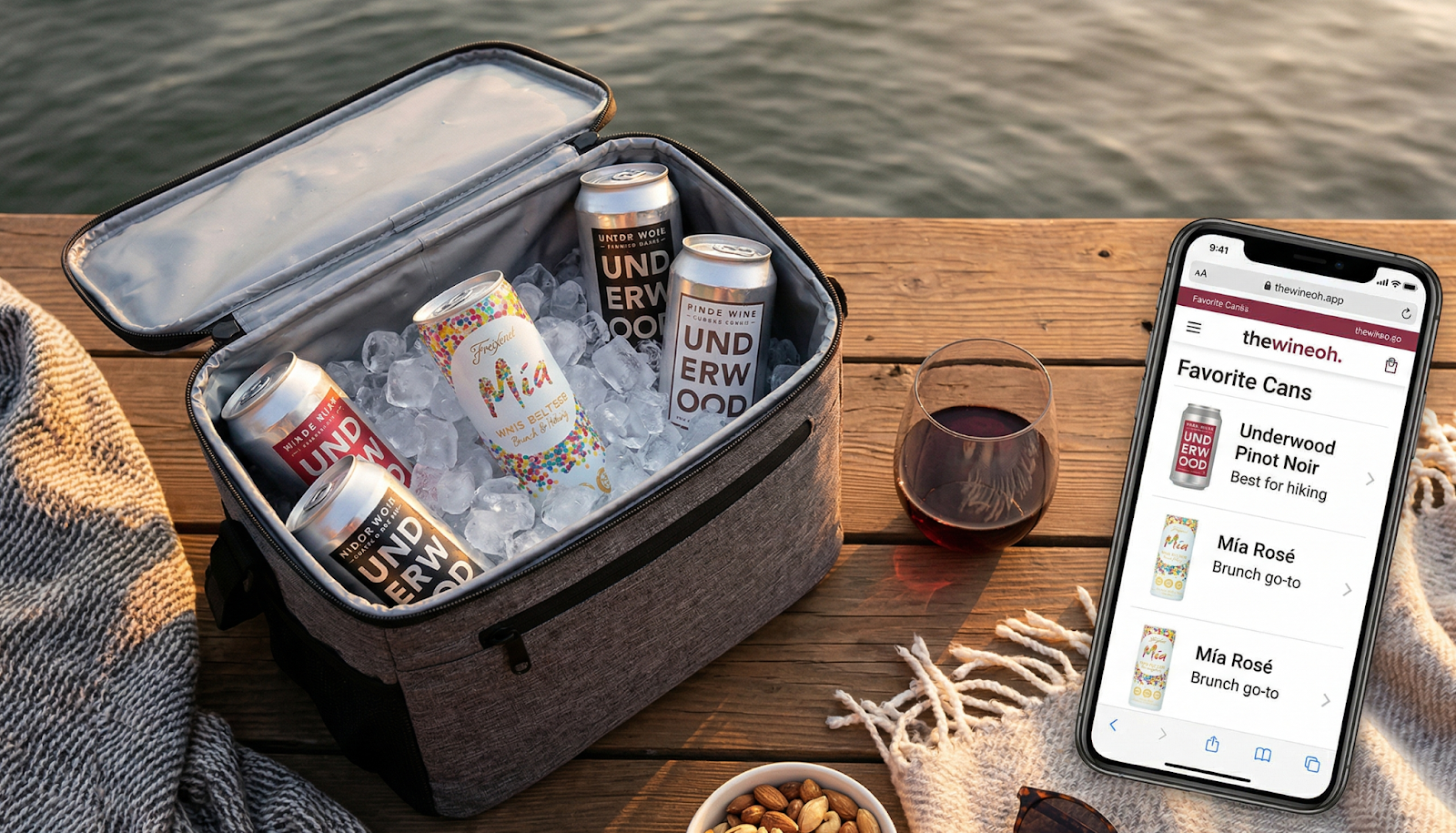
Here’s the problem with cans: They disappear. You drink one at a picnic, love it, toss the can in the recycle bin, and six months later, you’re staring at a shelf thinking, “What was that good one called?”
That’s why you log it. Open thewineoh.app. Scan the can (yes, it works on cans too). Rate it. Add a note: “Perfect for hiking,” “Best rosé can,” “Buy 4-packs next time.”
Now, next summer, you search “canned rosé” and boom, there it is. The exact brand. The exact moment. No guessing.
It’s not just tracking. It’s building a personal canned wine encyclopedia. And it’s free.
Canned wine isn’t a gimmick anymore. It’s a legitimate, high-quality, sustainable way to drink wine in 2026.
Some cans are better than bottles (for single servings). Some are equal. A few are still… well, let’s just say stick to the list above.
But the stigma? Gone. The quality? Real. The convenience? Unbeatable.
So grab a 4-pack. Pop a tab. Pour it into a glass. And toast to the fact that wine finally caught up with modern life.
Cheers to cans.
.svg)


Influencer
November 19, 2025
Consumers are shifting toward cleaner, additive-free wine experiences. Organic vineyards are proving that sustainable farming can elevate taste and quality. Here’s why clean wines are becoming the new favorite for mindful drinkers worldwide.
Discover More
.webp)
Influencer
November 21, 2025
Beyond cheese and charcuterie, the world of unexpected wine pairings is exploding. From sushi to spicy street food, new combinations are surprising wine lovers everywhere. Discover bold pairings that elevate both the dish and the glass.
Discover More
Influencer
November 19, 2025
Winemakers are blending centuries-old craftsmanship with cutting-edge tech innovations. Smart fermentation, AI-based grape analysis, and climate-controlled aging are reshaping the industry. A behind-the-scenes look at how technology is redefining experience.
Discover More.webp)
Influencer
November 19, 2025
Across the globe, female winemakers and sommeliers are redefining leadership in the wine world. Their creativity, precision, and bold ideas are inspiring a new era of wine culture. Meet the women changing how the world thinks, tastes, and talks about wine.
Discover More


