How Does Aerating Wine Change Its Chemical Profile? (Science Says Swirl Away)



March 26, 2026

Hey, let’s talk about something we’ve all done but few of us really understand: pouring wine into a glass (or decanter) and giving it a good swirl. You’ve heard it a thousand times: "let it breathe," "give it some air," "decant the young reds." But what’s actually happening there? Is it magic? Science? Both?
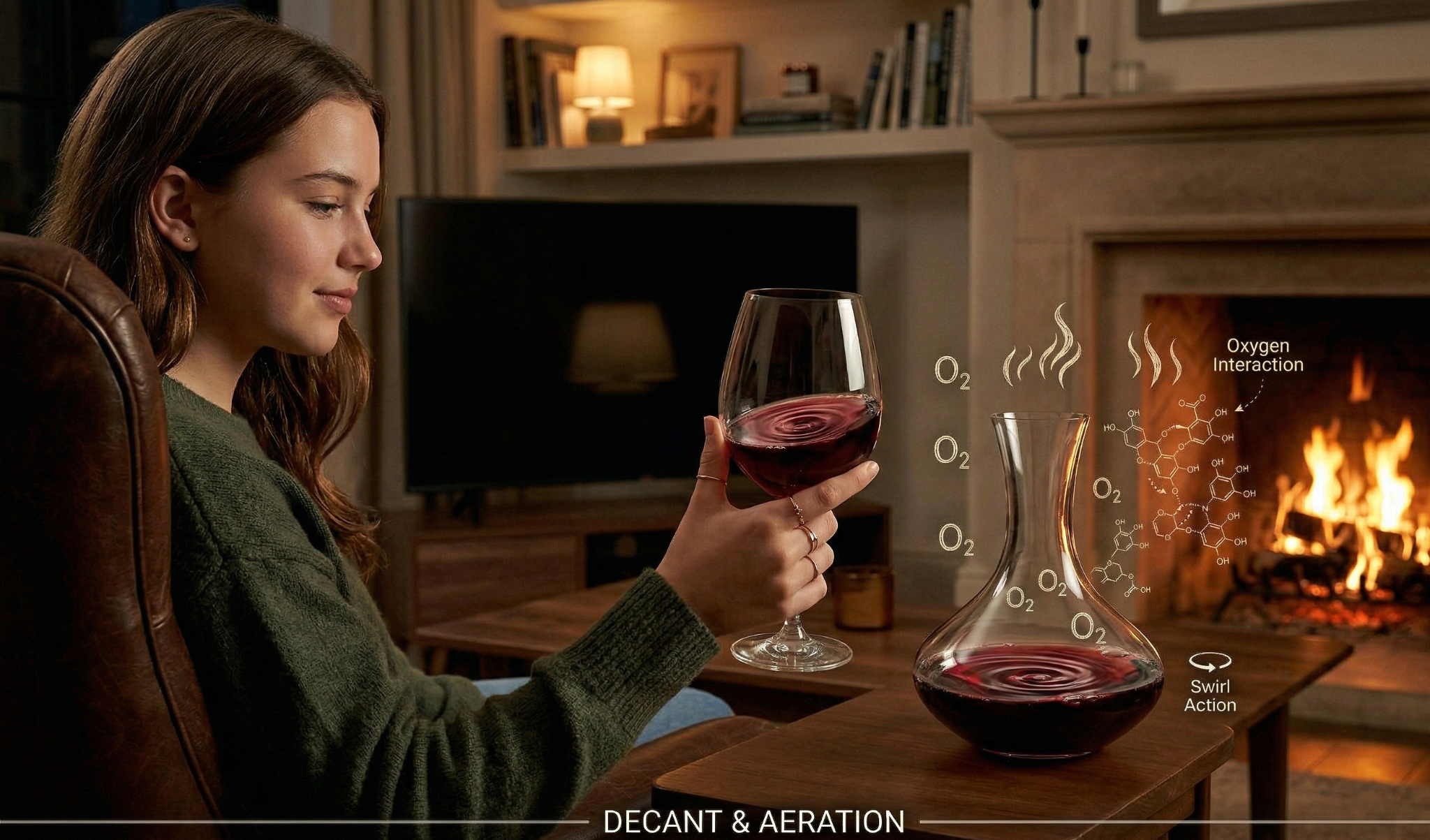
Good news: it’s science. Very cool, very measurable science. And I’m going to walk you through it like we’re sitting at your kitchen table with a couple open bottles, sniffing and tasting as we go. No jargon walls, no boring lectures, just the practical stuff you can use tonight, plus a simple way to track it all in thewineoh.app so you get better every time you open a bottle.
Ready? Grab a glass. Let’s aerate.
Picture this: you pop the cork. Air rushes in. For the first time in months or years, this wine meets oxygen. What happens next is pretty immediate and always happens, whether you swirl or not.
First things first: the bad smells blow off.
Every wine—even the good ones—carries some volatile compounds from fermentation that smell… less than ideal. Think:
These are normal byproducts, but they’re volatile, meaning oxygen exposure makes them evaporate fast. In the first 5–10 minutes after opening, you’ll typically lose 20–50% of these offenders just sitting there.
What you notice: The wine goes from slightly funky or reduced to cleaner and brighter pretty much immediately.
Pro move: Don’t skip the swirl here. More surface area = faster evaporation. Even a gentle 10-second swirl in your glass cleans things up noticeably.
Quick test for you: Open a young red tonight. Sniff at 0 minutes (funky?). Swirl 30 seconds. Sniff again. Notice the difference? Log it quick in thewineoh.app: "5 min swirl cleaned nose right up."
Wine contains sulfites—naturally occurring ones from fermentation plus added ones for preservation. They’re what give some wines that faint "matchstick" or preserved smell.
When you aerate, free sulfites (SO2) start dissipating. Studies show about 20–40% drop in the first 10–15 minutes of air exposure.
What this means for you:
White wines especially: If your Chardonnay or Sauvignon Blanc had any "struck flint" or preserved notes, they’ll mellow fast.
Easy experiment: Compare a swirled glass to an unswirled one side-by-side at 15 minutes. The aerated one should feel rounder, less aggressive. Note which style of wine you have in thewineoh.app "Sauv Blanc: 15 min made it way friendlier."
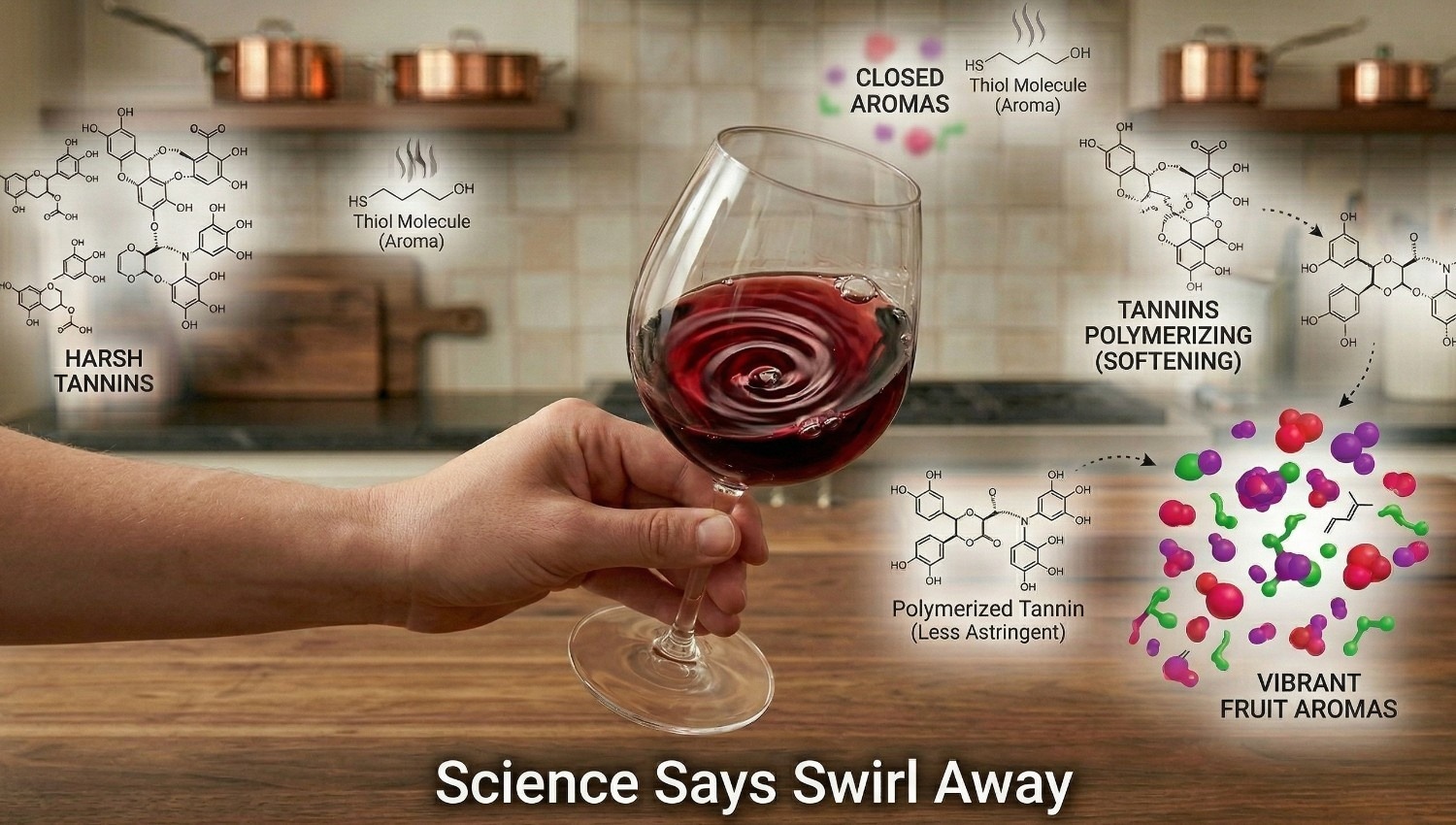
This is where aeration gets really interesting, especially for reds. Tannins are those grippy, sometimes astringent compounds from grape skins and oak that give structure but can taste harsh in young wines.
Here’s the chemistry magic: oxygen triggers tannin polymerization. Short, bitter tannin chains link up into longer, smoother ones. Your mouth perceives them as softer and less drying.
Timeline:
Which wines love this most?
Which wines don’t need it?
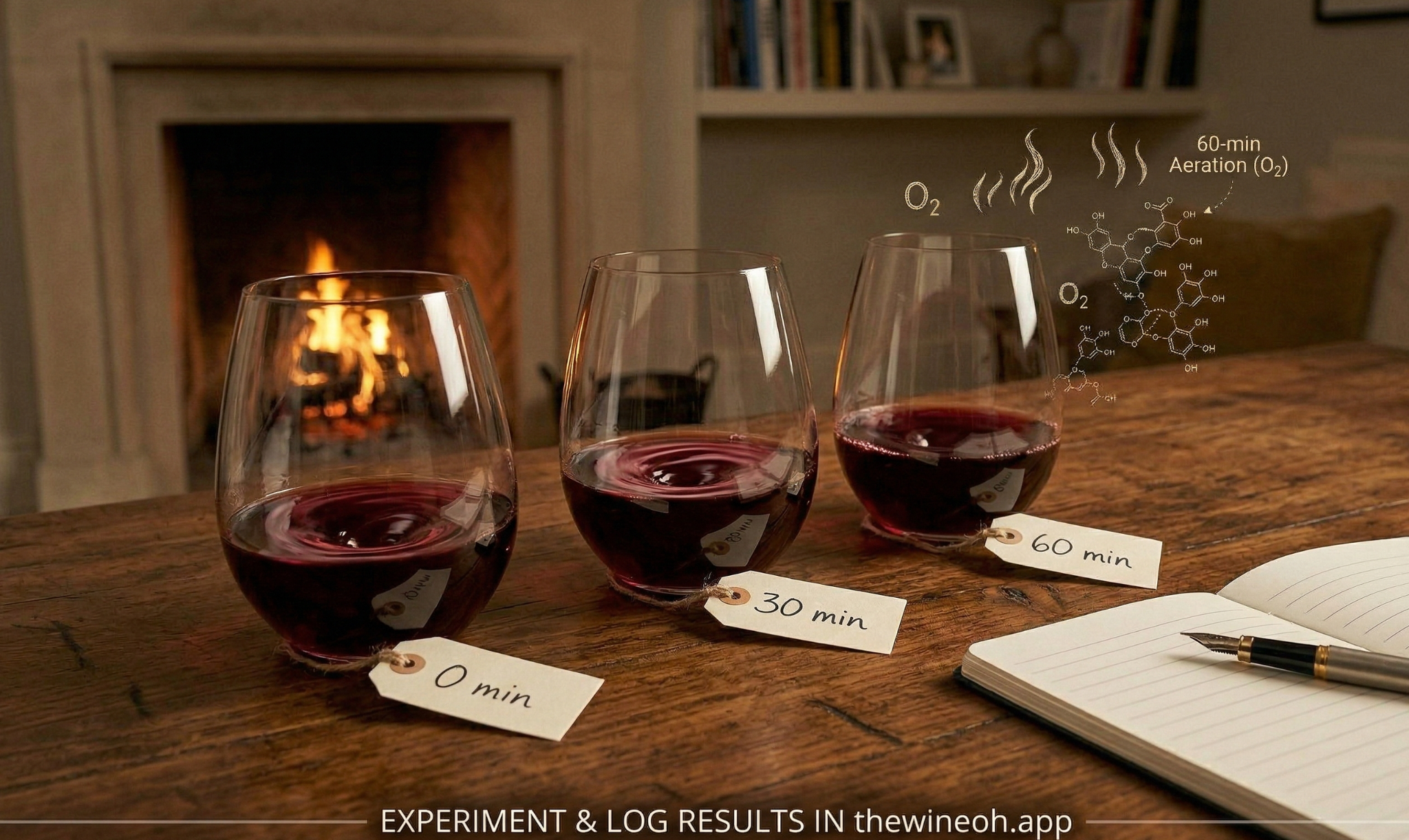
Your kitchen test: Grab a young red. Pour two glasses. Swirl/drink one immediately (grippy?). Let the other sit for 45 minutes. Side-by-side sip. The difference can be night and day. Jot your timing in thewineoh.app: "2019 Cab: 50 min = perfect mouthfeel."
This is the fun part everyone talks about. As oxygen works its way through the wine, aroma compounds evolve. Some evaporate, some transform, some become more perceptible.
What changes:
Science bit (kept simple): Gas chromatography studies show ethyl esters (fruity) increase 10–30% through hydrolysis reactions, while some aggressive green volatiles drop off.
White wine sweet spot: 15–30 minutes max. Beyond that, delicate floral aromas start to fade.
Red wine sweet spot: 45–90 minutes for most young structured reds.
Quick aroma check: Smell your wine every 15 minutes. Notice fruit shift? New spice? That’s the evolution happening live. Capture it: thewineoh.app "Pinot: 30 min brought out roses."
Here’s where people get into trouble. Oxygen isn’t all good, all the time.
After ~2 hours exposed:
Aged wines especially: Very old reds (15+ years) oxidize fast. 10–20 minutes max, then they start to fade.
Sparkling wines: Never aerate. You want the bubbles.
Your safety rule: If it’s not drunk for 90 minutes–2 hours, Coravin it or fridge it. Note over-aeration fails in thewineoh.app: "Left 2018 Cab 3hrs: flat, no thanks."
You’ve got options. Here’s what each does, ranked by oxygen delivery:
1. Simple glass swirl (least oxygen):
2. Decanter/carafe (medium oxygen):
3. Vinturi/Aerator pour (most oxygen):
Quick ranking for your bottles:
Test your gear: thewineoh.app "Vinturi on Malbec: 10 min = winner."
Young reds (Cab, Merlot, Syrah <5 years): 45–90 minutes decant. Tannins need work.
Lighter reds (Pinot, Gamay): 15–30 minutes glass swirl. Don’t overdo it.
White wines: 10–30 minutes max. Floral notes fade fast.
Chardonnay (oaked): 20–45 minutes if young/tannic.
Sauvignon Blanc: 15 minutes tops.
Aged reds (10+ years): 5–20 minutes gentle swirl. Already evolved.
Rosé: 10 minutes or skip.
Sparkling: Never.
Make it yours: scan bottle → thewineoh.app → "My aeration timing: 60 min."
Myth #1: "All wine needs aeration."
Nope. 70% of wines taste great 15 minutes after opening. Save decanting for tannic babies.
Myth #2: "Aerators are as good as decanting."
They’re faster but more aggressive. Use for time crunches, not delicate wines.
Myth #3: "Letting it breathe overnight makes it better."
False for 95% wines. Flat city by morning.
Myth #4: "The alcohol cooks off."
Only ~5–10% after hours. Flavor compounds matter more anyway.
Truth: Aerate smart. Time it. Taste it.
Here’s how to become an aeration pro in one evening:
What you need:
Do this:
What you’ll discover:
Log your results in thewineoh.app: "2021 Cab: 50 min peak. Tannins perfect, fruit alive."
Free: Your wrist + glass.$15: Basic aerator (Vinturi).$25: Simple decanter.
$100: Quality crystal decanter.
$300: Coravin (preserves without air).
Data says: Aerator = 80% decant speed. Glass swirl = universal safe bet.
Aeration isn’t snobbery. It’s unlocking what’s already in the bottle. Young wines ship "closed"—evolution needs a nudge. Mastering timing means:
Track your discoveries in thewineoh.app. Scan the bottle → add aeration timing → rebuy smarter next time.
Aeration = chemistry you control. Swirl smart. Time it right. Taste the difference.
What’s your aeration go-to? 30 minutes? Decanter? Tell me below—I’m curious what works for your bottles.
.svg)

Influencer
November 19, 2025
Consumers are shifting toward cleaner, additive-free wine experiences. Organic vineyards are proving that sustainable farming can elevate taste and quality. Here’s why clean wines are becoming the new favorite for mindful drinkers worldwide.
Discover More
.webp)
Influencer
November 21, 2025
Beyond cheese and charcuterie, the world of unexpected wine pairings is exploding. From sushi to spicy street food, new combinations are surprising wine lovers everywhere. Discover bold pairings that elevate both the dish and the glass.
Discover More
Influencer
November 19, 2025
Winemakers are blending centuries-old craftsmanship with cutting-edge tech innovations. Smart fermentation, AI-based grape analysis, and climate-controlled aging are reshaping the industry. A behind-the-scenes look at how technology is redefining experience.
Discover More.webp)
Influencer
November 19, 2025
Across the globe, female winemakers and sommeliers are redefining leadership in the wine world. Their creativity, precision, and bold ideas are inspiring a new era of wine culture. Meet the women changing how the world thinks, tastes, and talks about wine.
Discover More


